Four corporate disclosures released between November 10 and November 18, 2026, have redrawn the commercial map for anime merchandise and character IP licensing heading into 2027. Bandai Namco Holdings raised its full-year profit outlook after its physical Toys and Hobby division posted a 55.4% operating profit surge. One day later, Sanrio reported 22.9% first-half revenue growth alongside steep overseas margin compression. Within the following week, KADOKAWA and Medialink formed two equity joint ventures to scale anime pop-up retail in Asia, while Mercari and Suruga-ya established a US joint venture dedicated to Japanese hobbies and collectibles. Taken together, these mid-November developments show physical merchandise outperforming digital entertainment, retail distribution professionalizing across borders, and landed-cost discipline becoming the decisive variable for OEM procurement.
Bandai Namco Q2 FY2027: Physical Collectibles Outperform Digital Games
On November 10, 2026, Bandai Namco Holdings lifted its consolidated full-year net profit forecast for the fiscal year ending March 2027 from ¥130 billion to ¥162 billion, a 15.2% increase over the prior year, while raising its sales projection to ¥1.48 trillion. The underlying driver was a stark divergence between physical and digital divisions during the April–September 2026 interim period.
While the Digital Business recorded a 6.1% revenue decline to ¥217.44 billion and a 25.5% drop in operating profit, the Toys and Hobby Business expanded sales by 29.6% year over year to ¥412.04 billion. Operating profit in Toys and Hobby jumped 55.4% to ¥101.09 billion, crossing the ¥100 billion mark in a single half-year. Management attributed this expansion to high-margin collector categories: Gundam model kits and figures (growing from ¥49.3 billion to ¥58.9 billion in Japan), ONE PIECE merchandise (rising from ¥48.2 billion to ¥58.3 billion), trading card games, Ichiban Kuji lottery goods, and Gashapon capsule toys.
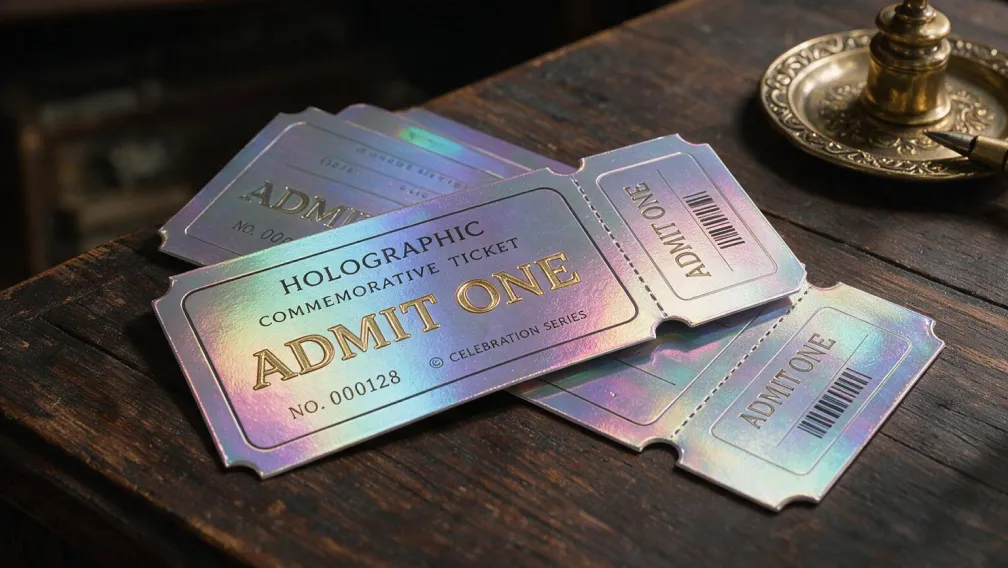
For B2B merchandise planners, the structural takeaway is clear. Trading cards, lottery-tier display items, and capsule-format collectibles are generating higher margin resilience than software releases. Brands expanding into card-based or lottery-tiered assortments should evaluate production tolerances for custom trading cards and custom holographic tickets, where foil registration, stock caliper consistency, and anti-counterfeit surface finishes directly govern collector acceptance.
Sanrio H1 FY2026: Multi-Character Growth Meets Overseas Cost Pressure
Sanrio's semi-annual filing, released on November 11, 2026, presented a contrasting operational reality. First-half revenue rose 22.9% year over year to ¥107.7 billion, propelled by a 31.4% revenue surge in Asia and continued diversification beyond Hello Kitty into a multi-character portfolio across toys, apparel, beauty, and corporate licensing. Operating profit, however, grew at a slower 9.4% pace to ¥42.9 billion.
The statutory report highlighted acute margin compression in overseas segments, with North America operating profit declining 31.9% due to rising cost of goods sold (COGS), labor expenses, and logistics overhead. Sanrio also flagged raw material and input cost exposure, noting limited pricing power to pass higher manufacturing costs directly to licensees and consumers. For merchandise importers and licensing agencies, this disclosure confirms that top-line IP demand no longer masks inefficient sourcing. Protecting retail margins in 2027 requires consolidating multi-SKU character programs with direct factories that control material yield, minimize defect scrap, and eliminate intermediary markups.
Cross-Border Retail Infrastructure: KADOKAWA-Medialink and Mercari-Suruga-ya
Two joint-venture announcements in mid-November underscore how rapidly Japanese IP distribution is shifting from passive export to localized retail execution:
- KADOKAWA and Medialink (November 18, 2026): The Japanese publisher and Hong Kong IP management firm agreed to establish two equity-based joint ventures in Hong Kong and Thailand. The mandate is to accelerate regional character licensing and expand experiential anime pop-up retail across Asia.
- Mercari and Suruga-ya (November 16, 2026): Japan's largest C2C marketplace and major hobby retailer formed Mercari Surugaya Inc. in the United States to procure, distribute, and retail Japanese entertainment and hobby goods directly to North American collectors.
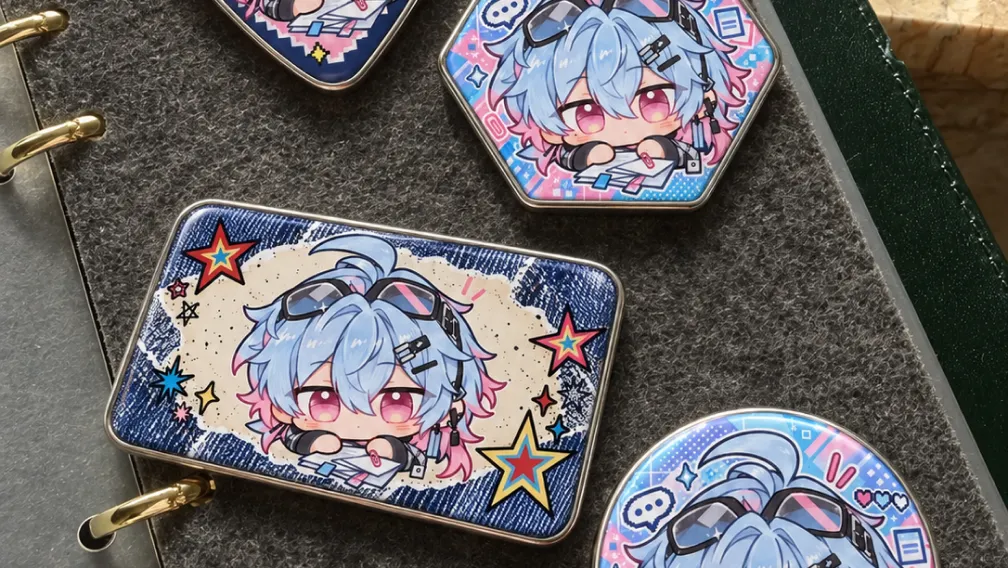
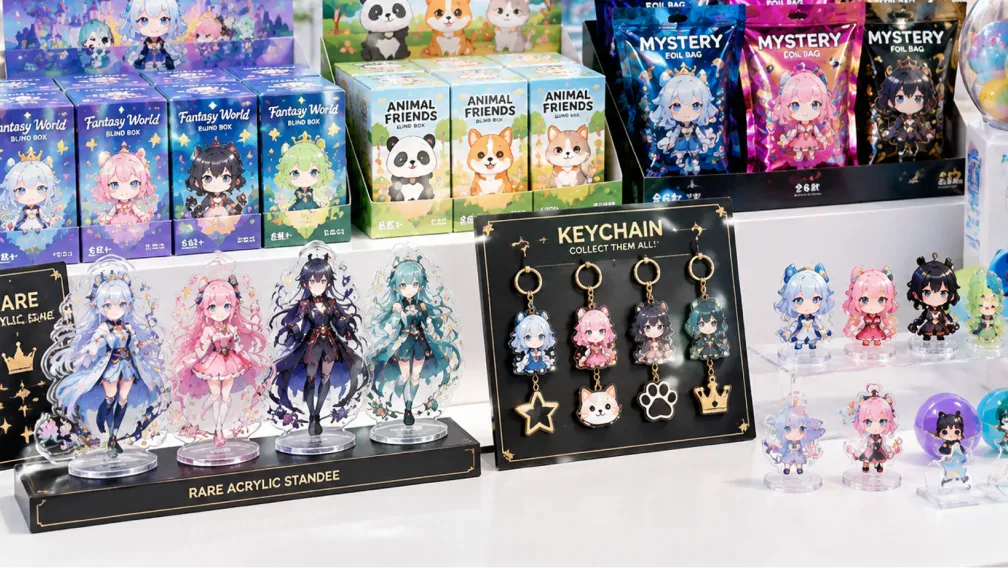
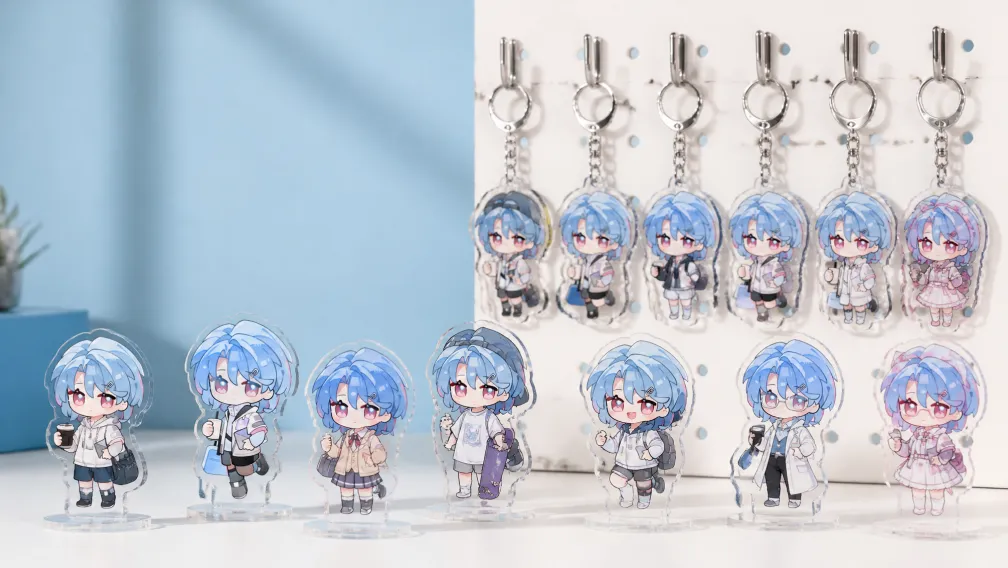
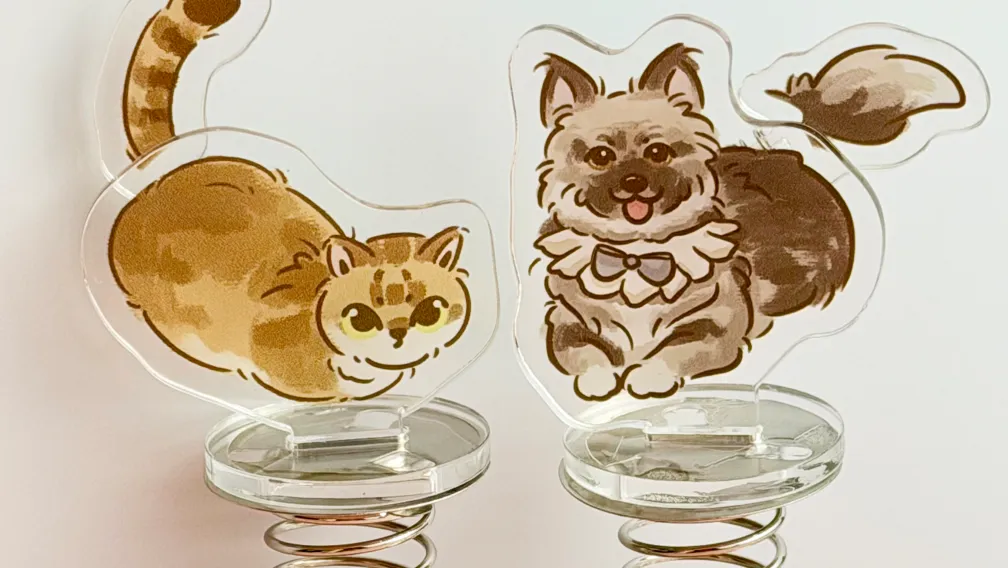
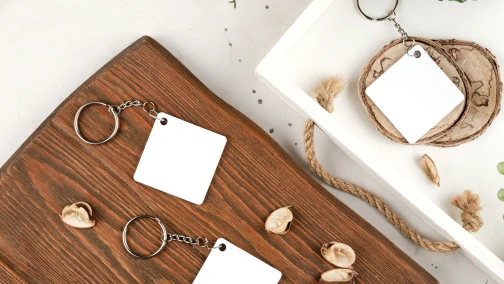
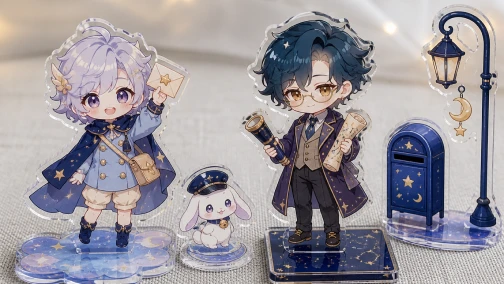
Experiential pop-up stores and localized US hobby channels operate on tighter inventory cycles than traditional wholesale. Pop-up events—whose operational dynamics we examined in our report on experiential retail and pop-up merchandise trends—depend on exclusive, high-visual-impact SKUs that photograph well and justify event-only pricing. Standard assortments anchor around custom acrylic standees, custom acrylic keychains, and custom button pins, often packaged in blind-bag or tiered lottery formats modeled on Japan's Ichiban Kuji system.
Mid-November 2026 Industry Benchmarks at a Glance
| Company / Venture | Disclosure Date | Key Figure / Milestone | Supply Chain Implication |
|---|---|---|---|
| Bandai Namco Holdings | Nov 10, 2026 | Toy & Hobby H1 sales +29.6% (¥412.04B); profit +55.4% (¥101.09B) | Sustained demand for trading cards, lottery tiers, and collector-grade physical SKUs |
| Sanrio Co., Ltd. | Nov 11, 2026 | H1 revenue +22.9% (¥107.7B); North America OP –31.9% | Heightened focus on direct-factory COGS control and multi-character SKU consolidation |
| Mercari Surugaya Inc. | Nov 16, 2026 | New US joint venture for Japanese entertainment & hobbies | Faster US access to Japanese-standard collectibles; higher baseline for print and finish QC |
| KADOKAWA × Medialink | Nov 18, 2026 | Two equity JVs in Hong Kong and Thailand for anime pop-up retail | Increased short-run, event-exclusive manufacturing runs across Southeast and East Asia |
Manufacturing and Procurement Priorities for Q1–Q2 2027
Multi-Character Assortment Consolidation
Sanrio's 31.4% Asian growth underscores the commercial power of multi-character lineups, where a single licensing drop spans six to twelve characters across three or four product formats. Splitting those SKUs across separate vendors inflates freight costs and creates visible color discrepancies on retail shelves. Buyers should qualify factories capable of running UV-printed acrylics, pressed tinplate badges, and foil-stamped paper goods under unified ICC color management so character palettes match across materials.
Lottery and Blind-Format Packaging Engineering
Bandai Namco's Ichiban Kuji and Gashapon momentum reinforces the shift toward randomized and tiered retail mechanics. As outlined in our analysis of blind-box and gacha retail mechanics, these formats require strict packing-line controls: opaque tamper-evident foil pouches, documented ratio verification for chase or S-tier pieces, and barcoded inner cartons that prevent retail sorting errors.
Compliance as a Prerequisite for Cross-Border Retail
As joint ventures like KADOKAWA-Medialink and Mercari Surugaya formalize cross-border distribution, factory audit documentation becomes non-negotiable. Licensors onboarding OEM partners for 2027 programs routinely require ISO 9001 quality management certification, BSCI or Sedex social compliance audits, RoHS/REACH material test reports, and—for major international IP—Disney FAMA authorization.
Partnering With Modori Works for 2027 IP Programs
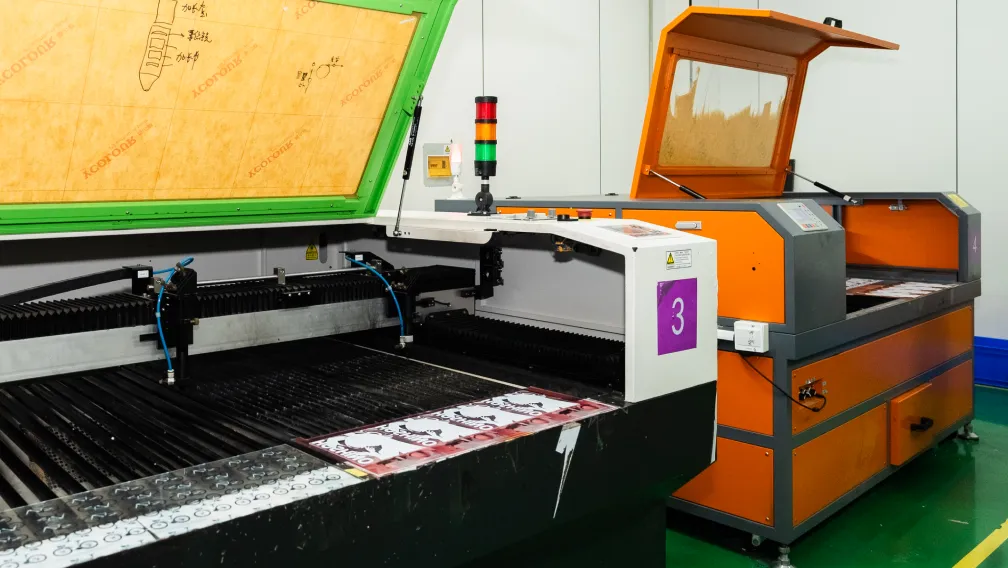
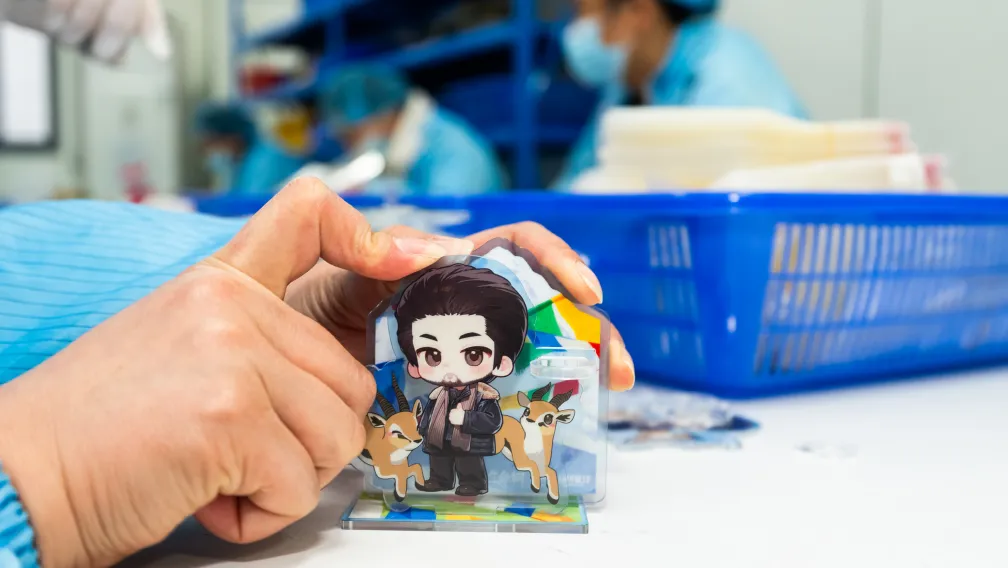
Modori Works supports licensed merchandise and pop-up retail programs from a 10,000-square-meter production campus in China's Yangtze River Delta. Operating more than 100 machines across UV flatbed printing, CO2 laser cutting, hot stamping, and badge pressing lines, the facility holds ISO 9001, BSCI, Sedex, and Disney FAMA certifications. Whether consolidating multi-character acrylic standees, blind-bag trading cards, or event-exclusive button pins, our engineering team delivers repeatable color accuracy, verified tolerances, and factory-direct cost control. Submit your 2027 artwork specifications and target volumes for a technical feasibility review and quotation within one working day.
-

Modori Works Team
Custom B2B Merchandise Manufacturer
Authored by the engineering and production specialists at Modori Works. We share deep manufacturing insights, material breakdowns, and workflow guides to help global brands, artists, and event organizers bring custom acrylics, keycaps, and collectibles to life with strict IP protection.