If you are preparing your first convention table and asking what sells at artist alley, the consistent answer across creator guides and convention reporting is a two-layer mix: low-priced impulse items that move in volume, and a small number of higher-priced display pieces that carry your profit. Stickers, acrylic keychains, button pins and art prints drive transaction count; acrylic standees and larger prints drive revenue per sale. This guide breaks down the product mix, reported price ranges and margins, inventory logic, booth display, and the compliance rules that decide what you are actually allowed to sell.
The Artist Alley Opportunity in Numbers
Convention demand is large and measurable. According to the organizer's official wrap-up release for Anime Expo 2025, the event recorded more than 410,000 turnstile visits from attendees representing over 65 countries and generated more than $110 million in economic impact for Los Angeles. Turnstile visits count entries rather than unique individuals, but the scale is clear. On the market side, Fortune Business Insights values the global anime merchandising market at roughly USD 12.07 billion in 2025 and projects it to reach USD 27.35 billion by 2034, a compound annual growth rate of 9.52 percent.
A meaningful share of that spending flows through artist alley tables, where attendees buy directly from independent creators. Convention coverage also documents strong fan demand around major franchises such as Pokémon, Final Fantasy and Jujutsu Kaisen; at large expos, that demand is met primarily by officially licensed merchandise in the exhibit hall. For independent artists, the useful takeaway is which formats fans repeatedly purchase and how those formats behave at different price points. It is not a signal to produce unlicensed goods. The compliance section below explains the boundary.
What Sells at Artist Alley: The Core Product Mix
In anime convention merch, creator guides and vendor communities consistently rank the same categories among artist alley best sellers: stickers, acrylic keychains and charms, button pins, art prints and small merch sets. Each category plays a different economic role at the table, and a balanced booth usually carries all of them.
Stickers: the volume driver
Stickers are the classic entry-level purchase. A sticker guide published by Conventory in April 2026 reports typical artist alley retail prices between $2 and $5 per sticker, with estimated gross margins of 70 to 85 percent when production is ordered at volume. Low prices remove purchase hesitation, which makes stickers the item most attendees will buy even from an artist they have just discovered. Waterproof custom vinyl stickers with die-cut shapes are the standard format, and many vendors price single stickers low while offering a discounted multi-sticker deal to lift the average transaction.
Acrylic keychains and charms: the margin anchor
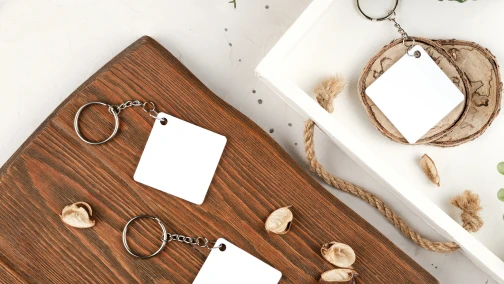
Acrylic keychains sit in the middle of the price ladder. The same Conventory guide reports typical retail between $8 and $15 per charm, with bulk production costs commonly cited around $1.50 to $3 per piece depending on size, printing and finishing. That spread is why experienced vendors describe acrylic charms as the profit anchor of the table: the unit cost is low enough for healthy margin, while the perceived value supports a mid-range price. Double-sided printing, epoxy or holographic finishes and custom shapes give custom acrylic keychains enough variety to support a full character lineup.
Acrylic standees: the display piece
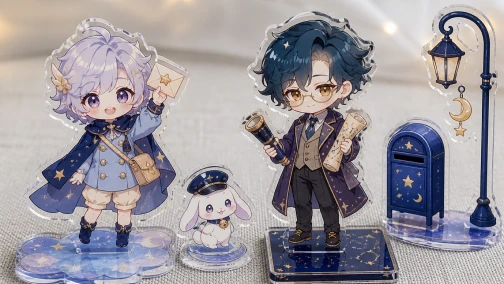
Standees serve two functions at once. A creator guide published by CustomWLD in December 2025 places typical artist alley standee retail at $15 to $25 and above, noting that standees command higher prices than keychains because of size and display value. An assembled standee on a riser also works as booth advertising, drawing attention from across the aisle before a single unit sells. Because unit costs rise with size and base complexity, most vendors stock standees in smaller quantities than charms. Custom acrylic standees are best reserved for your strongest designs.
Button pins: the bundle builder
Button pins remain a convention staple because they are cheap to produce, easy to display on boards and natural bundle items. A size guide from 4OVER4 lists standard button diameters from one inch to three inches and describes two and a quarter inches as the classic event size. Fandom-focused guides such as OtaVault note that anime and itabag communities often prefer larger badge formats in the 57 to 75 millimeter range. Sets of custom button pins priced as a bundle give attendees an easy way to buy more than one design at once.
Photocards and small card formats
Card formats have grown alongside fan collecting culture. Transparent and lenticular cards photograph well, trade easily between fans and cost little to ship or restock. For artists, custom transparent photocards work as a low-priced add-on, a convention freebie that drives return visits, or part of a higher-priced merch set. Cards pair naturally with standees and keychains in bundles built around a single original character.
Artist Alley Price Ranges and Profit Margins: How to Read the Numbers
The price and margin figures above come from third-party creator guides, specifically Conventory (April 2026) and CustomWLD (December 2025). Treat them as reference ranges gathered from vendor communities, not as quotes from any manufacturer. Your actual margin depends on order quantity, size, printing method, finishing, packaging and shipping. The working method is simple. Confirm a real unit cost from your supplier at your planned quantity, set a retail price inside the range buyers already accept for that format, then test whether the remaining margin covers table fees, travel and unsold stock. A margin that looks strong on paper can disappear once the full cost of the weekend is counted.
Price tiers matter as much as individual prices. A common booth structure places stickers and small pins in an under-five-dollar tier, keychains and cards in a five-to-fifteen-dollar tier, and standees or large prints above fifteen dollars. This ladder lets an attendee spend at whatever level their budget allows, and bundle pricing encourages movement up the ladder.
Inventory Logic: How Much Stock to Bring
Inventory planning follows the same tier structure. Stock deep on the cheap tier, moderate on the mid tier and shallow on the premium tier. Stickers and pins sell in multiples and rarely run too deep; standees tie up cash per unit and punish overestimates. For a first event, a conservative approach is to bring enough cheap items to sell all weekend, a mid-tier quantity sized to your realistic audience, and only a handful of premium pieces per design. Track sales by hour during the event. That record becomes your reorder and restock baseline for the next show, which is far more reliable than any generic formula.
Logistics belong in the same calculation. Keep restock cartons under the table, label them by design, and bring more change and payment backup than you expect to need. Restocking mid-day from a hotel room or car is common practice at multi-day events, so split your inventory instead of displaying everything at once.
Display: Presentation That Converts Browsers
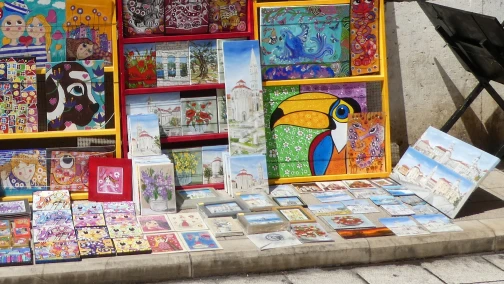
Artist alley buyers decide in seconds. Vertical display matters because a flat table disappears in a crowded aisle: grid walls, risers and clip strips put keychains, pins and prints at eye level. An assembled standee and a sample of each charm finish show quality better than any signage. Prices should be visible without asking; hidden pricing suppresses impulse purchases. Bundle signs such as mix-and-match sticker deals or pin set pricing do the upselling while you handle other customers. Finally, keep the table surface clear enough that attendees can pick items up. Touch converts.
Compliance: What You Are Allowed to Sell
Rules differ by event, and they are enforced. Anime Expo's published artist alley policy states zero tolerance for bootleg items, grey market goods and pseudo-merchandise, and it prohibits mass-produced items at artist alley tables. Anime Detour's artist alley policy permits original character works and fan art drawn in your own style without trademarked logos, while banning traced or copied artwork. On the legal side, references such as Nolo explain that fan art is generally a derivative work, and that disclaimers or credit do not replace permission from the rights holder. Some rights holders publish fan-content policies that permit limited fan merchandise, while others enforce takedowns; policies change, so verify the current version for any franchise before you invest in stock. Nothing in this article is legal advice. When real money is involved, consult an intellectual property attorney and read the current rules of each convention you attend.
Preparing a Made-to-Order Production Run Before the Event
Custom merch for conventions is made-to-order production, and the calendar works backwards from the event date. Many vendors plan production four to eight weeks ahead, leaving room for proofing, manufacturing, shipping and a buffer for reprints. The preparation sequence is straightforward: finalize the designs that earned the strongest response from your audience, prepare print-ready files, approve proofs before full production, then schedule delivery with slack for delays. Supplier guides consistently reference 300 DPI artwork at final size, CMYK color review and clear cutlines as baseline file requirements; your manufacturer's confirmed specifications take priority over any general guide.
On rights: Modori Works manufactures custom merchandise from your original artwork or properly licensed designs, and clients are responsible for confirming they hold the rights to the artwork they submit. That boundary protects your table, your supplier relationship and your standing with convention organizers.
Key Takeaways for Your Next Convention
The artist alley product mix is stable across sources: stickers for volume, acrylic keychains for margin, standees for display value, pins and cards for bundles. Reference price ranges from Conventory and CustomWLD give you a starting ladder, and your own sales records refine it after each event. Plan stock by tier, display vertically, price visibly, and keep every design inside the rules of the event and the law. When you are ready to turn your original characters into made-to-order merchandise, explore Modori Works' custom vinyl stickers, acrylic keychains, acrylic standees, button pins and transparent photocards, and request a quote for your next event run.
-

Modori Works Team
Custom B2B Merchandise Manufacturer
Authored by the engineering and production specialists at Modori Works. We share deep manufacturing insights, material breakdowns, and workflow guides to help global brands, artists, and event organizers bring custom acrylics, keycaps, and collectibles to life with strict IP protection.