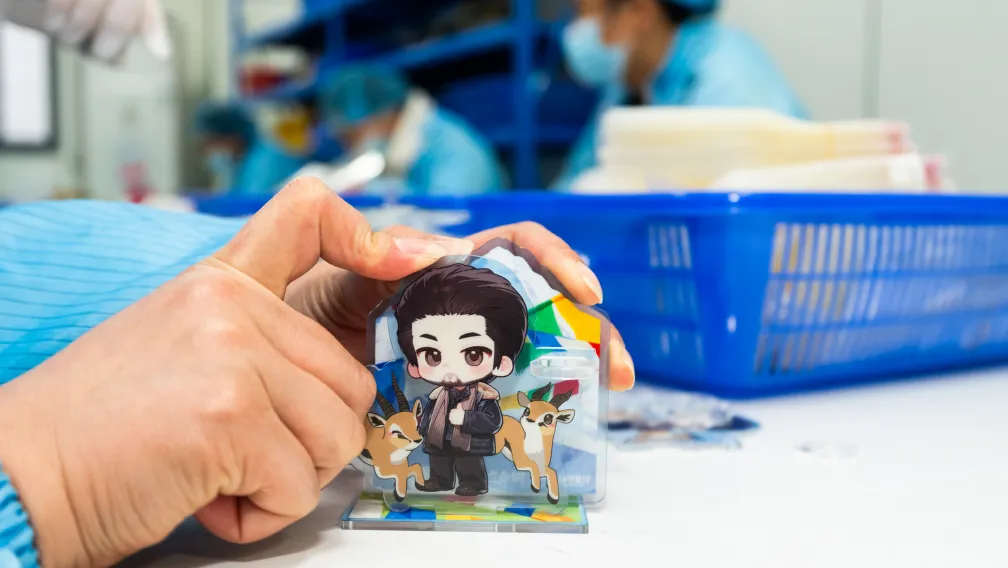
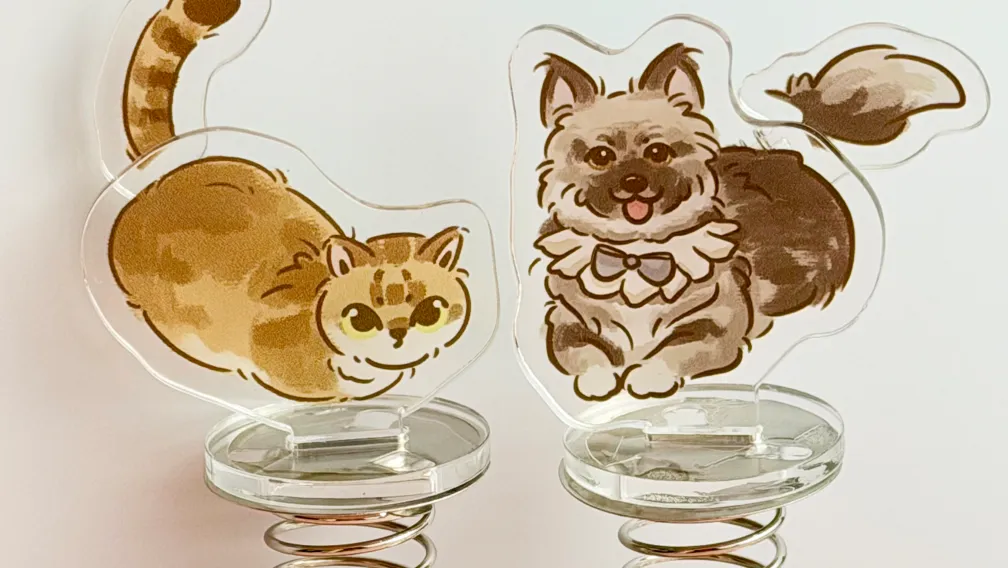
Custom acrylic fridge magnets combine high-resolution UV printing with durable cast acrylic and reliable magnetic backing to create premium display merchandise. As a direct manufacturer operating a 1500m² audited facility, we process cast acrylic sheets through CNC routing and apply customized artworks via dual-layer UV curing. This process ensures scratch-resistant and highly saturated visuals suitable for IP merchandising, retail collections, and corporate promotional items. Our production lines accommodate everything from standard flat shapes to complex multi-layer and interactive shaker designs.
We provide full structural support, validating cut lines and magnetic load capacities on a digital proof prior to bulk manufacturing, ensuring uniform quality across your entire order volume.


Define the physical attributes of your custom acrylic magnets. Each specification is reviewed by our prepress team and confirmed on a digital proof before manufacturing begins.
Standard dimensions range from three to ten centimeters, typically utilizing a three-millimeter acrylic base. Thicker acrylic or multi-layer constructions are accommodated based on the design requirements.
Die-cutting parameters accommodate any vector silhouette. Our prepress team verifies the artwork to ensure thin protrusions maintain sufficient structural width for durability.
Artwork is standardly printed on the reverse side (sub-surface printing) to protect the ink behind the acrylic. Double-sided printing is available for designs applied to transparent surfaces like glass doors.
Modify the visual impact with specialized surface treatments, including epoxy doming for a 3D tactile feel, holographic film lamination, or frosted matte textures.
Select between flexible rubber magnets (ferrite-based, soft contact, broad adhesion) or hard neodymium discs (NdFeB, high pull-force, small footprint) based on the size and weight of the acrylic structure.
Orders can be delivered in bulk flat packs or individually packaged in OPP bags with custom-printed backing cards tailored for immediate retail display.
| SPECIFICATION | DETAILS |
|---|---|
| MATERIAL | Cast acrylic (PMMA) sheet — high clarity, resists yellowing, structural stability |
| MAGNET TYPE | Flexible rubber magnets (flat contact) or embedded hard discs |
| DIMENSIONS | Standard sizes from three to ten centimeters; custom sizing available upon request |
| PRINTING | High-resolution UV printing with opaque white ink underbase; single or double-sided |
| CUTTING | CNC precision engraving and Laser cutting to any vector silhouette |
| STYLES | Standard clear, epoxy-coated, holographic, multi-layer, and shaker structures |
| MOQ | Flexible volume processing; exact quantity confirmed based on build complexity |
| ARTWORK FILES | PSD, AI or PNG at print resolution, transparent background required |
| PROOFING | Digital proof providing cut lines and print configuration issued prior to production |
| COMPLIANCE | CE Certification, EU RoHS Directive compliant, manufactured in a BSCI audited facility |
| PACKAGING | Individual OPP bags with protective surface film; custom retail backing cards optional |
Commercial buyers require clarity on durability, magnetic strength, and visual consistency before confirming an order. This section outlines the structural details and processing standards that define our custom acrylic magnets.
The functionality of a fridge magnet depends entirely on its load-bearing capacity and surface interaction. We utilize industrial-grade flexible rubber magnets (ferrite bonded in a synthetic matrix) for standard flat designs. This material provides a broad, stable adhesion area and a soft contact surface that prevents scratching on stainless steel refrigerators and whiteboards. For thicker or multi-layered acrylic structures, we specify embedded neodymium (NdFeB) discs to deliver concentrated, high-pull magnetic force capable of supporting the heavier substrate.
We strictly utilize cast polymethyl methacrylate (PMMA) rather than extruded plastics. Cast acrylic maintains high light transmission and resists UV degradation, preventing the yellowing effect common in lower-grade plastics. Artwork is applied via UV-cured printing, typically on the reverse side of the front acrylic layer. This technique protects the ink behind a solid acrylic shield, making the design fully scratch-resistant and waterproof during daily handling.
Depending on the design complexity, panels undergo either CNC precision engraving or industrial laser cutting. Laser cutting naturally heat-seals the acrylic, yielding a smooth, glass-like edge. CNC routing is deployed for multi-layered components requiring exact depth tolerances. Both methods ensure that the approved silhouette is reproduced without burrs or micro-fractures, maintaining uniformity across bulk orders.
To guarantee consistency across different production runs, we archive all approved digital proofs, cut-line vectors, and color management profiles. When clients initiate a repeat order, the exact machine parameters are retrieved. This systematic archiving is particularly critical for merchandise distributors and IP licensors who rely on exact color matching and structural uniformity across sustained retail campaigns.
Bulk shipments require calculated packaging to prevent abrasion and manage the dense weight of magnetic goods. Each magnet is individually sealed in an OPP bag, with a protective film left on the acrylic face for the end-user to remove. For retail readiness, we manufacture custom-printed backing cards, blister packs, and branded display boxes, allowing the product to move directly from the shipping carton to the retail shelf.
Sourcing customized magnetic products for retail, corporate merchandising, or IP distribution requires a concrete understanding of substrate properties, manufacturing technologies, and compliance standards. This guide details the technical specifications and procurement considerations necessary to execute a successful custom acrylic fridge magnet project.
The primary material utilized in high-quality acrylic magnets is Polymethyl Methacrylate (PMMA), commonly referred to as cast acrylic. Unlike extruded acrylic, which is manufactured by pushing the heated polymer through a die, cast acrylic is produced by pouring liquid resin into molds. This casting process results in a substrate with superior optical clarity, a higher molecular weight, and excellent resistance to surface crazing during CNC machining. For magnetic display applications, cast acrylic ensures that the transparent layers remain free of optical distortion and resist UV-induced yellowing over long-term exposure to ambient light.
The transition from a digital artwork file to a physical acrylic magnet involves several precise, sequential manufacturing phases.
Pre-Press and Cut-Line Engineering: Digital files undergo pre-flight checks to establish vector cutlines and verify CMYK color profiles. Bleed margins and specific attachment zones for the magnetic backing are defined to prevent structural weaknesses in thin areas of the design.
High-Resolution UV Printing: The artwork is applied directly to the acrylic substrate using industrial UV flatbed printers. A critical component of this phase is the application of a white ink underbase. Because acrylic is naturally transparent, the white layer acts as a necessary barrier, ensuring that the CMYK colors appear opaque and saturated rather than translucent. The UV curing process utilizes ultraviolet light to instantly polymerize the ink, creating a durable, scratch-resistant layer that bonds molecularly with the PMMA surface.
CNC and Laser Cutting: Depending on the edge finish required and the complexity of the design, panels are routed using Computer Numerical Control (CNC) engraving machines or cut via industrial lasers. Laser cutting naturally heat-seals the edges, providing a polished, glass-like finish, while CNC routing offers high mechanical precision for complex, multi-layered structural cuts without thermal distortion.
The functional core of a fridge magnet is its backing. The selection of the magnetic material determines the load-bearing capacity and application suitability of the final product.
Flexible Rubber Magnets: The most common backing consists of ferrite powder bonded within a synthetic rubber matrix. These are typically isotropic, meaning they possess magnetic properties in all directions, providing a stable, flat surface area for adhesion. They are ideal for standard decorative acrylic magnets as they conform slightly to the application surface and prevent scratching of appliance finishes.
Hard Neodymium Magnets: For heavy-duty applications or designs requiring a minimal magnetic footprint (such as thick, multi-layered shaker magnets), neodymium (NdFeB) discs are utilized. These rare-earth magnets offer exceptionally high pull-force relative to their small size and are firmly adhered to the rear panel.
Adhesive Integration: The magnetic backing is joined to the acrylic panel using high-tack, pressure-sensitive adhesives (PSA) or specialized UV transfer glues. Industrial laminating machines apply uniform pressure to eliminate air entrapment, ensuring the backing does not peel or delaminate under the fluctuating temperature conditions common in kitchen or industrial environments.
Standardized quality control protocols are essential for maintaining consistency across bulk production runs. Inspections occur at multiple stages. Initially, the raw substrate is checked for gauge tolerance and surface blemishes. During printing, color accuracy is monitored against approved digital proofs. Post-cutting, the acrylic edges are examined for burrs or micro-fractures. Final assembly checks verify the precise alignment of the magnetic backing and test the magnetic pull-force to ensure it meets the specified load requirements based on the product's dimensions.
B2B procurement necessitates strict adherence to international safety and environmental regulations. Acrylic magnets manufactured for global distribution must comply with several critical directives.
RoHS Compliance: The PMMA substrates, UV inks, and laminating adhesives utilized must be free of restricted heavy metals (such as lead, cadmium, and mercury) and specific hazardous compounds. This complies with the EU RoHS directives (Directive 2015/863 & 2011/65/EU). Independent laboratory testing and CE certification documentation validate this compliance for customs and retail distribution.
Facility Audits: Ethical manufacturing is validated through comprehensive facility audits. Certifications such as the amfori BSCI (Business Social Compliance Initiative) demonstrate a manufacturer's verified commitment to fair labor practices, occupational health, and safety standards. Selecting a supplier with these credentials mitigates supply chain and reputational risks for international brands and IP licensors.
Proper packaging is critical to preventing surface abrasions and transit damage. Individual acrylic magnets are typically housed in protective OPP bags. A protective electrostatic film is left on the front surface of the acrylic, which the end-user peels off prior to display. For retail environments, custom-printed backing cards with hang holes and rigid paper boxes are utilized. During bulk transit, cartons are weight-managed due to the density of the magnetic components, ensuring that the bottom layers are not crushed under the load of the shipment.
Buyers frequently evaluate acrylic against other common substrate materials. The following table outlines the technical differences to aid in material selection for procurement projects.
| Parameter | Cast Acrylic (PMMA) | PVC / Soft Rubber | Tinplate / Metal |
|---|---|---|---|
| Visual Resolution | Exceptionally high; allows for fine text, gradients, and photographic prints | Moderate; limited by mold precision and liquid color fills | High; utilizes standard CMYK offset printing on paper wrap |
| Structural Rigidity | Rigid and flat; retains shape indefinitely without warping | Flexible; can warp or bend under extreme heat | Rigid; but highly susceptible to permanent denting upon impact |
| Edge Customization | High flexibility; intricate silhouettes achieved rapidly via CNC/Laser | High flexibility; requires the creation of physical injection molds | Low to Moderate; typically restricted to standard tooling dies (circles, squares) |
| Production Setup | Fast turnaround; relies directly on digital vector files | Slower turnaround; requires physical mold machining and testing | Moderate turnaround; requires tooling setup and offset plate creation |
| Durability | High scratch resistance (ink protected behind substrate); waterproof | High drop resistance; waterproof | Susceptible to rust if scratched or exposed to high moisture environments |
Identifying a reliable factory partner involves evaluating their vertical integration and processing capabilities. A fully equipped manufacturer handles all core stages in-house—from laser cutting and UV printing to magnetic laminating and final assembly. This integration reduces lead times, minimizes cross-vendor defect rates, and ensures consistent quality control. Furthermore, the capacity to process flexible batch sizes, ranging from initial prototype sampling to high-volume commercial production, provides necessary scalability for merchandise distributors and enterprise procurement teams.