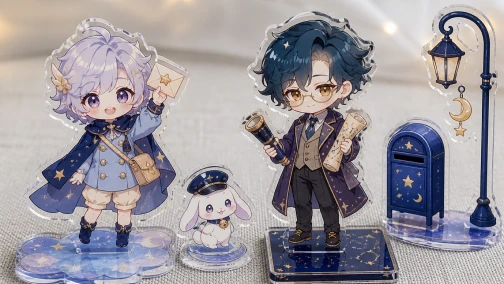
A custom acrylic standee turns character artwork into a free-standing display piece: a printed acrylic panel cut to the figure's silhouette, seated in a matching base. We produce each acrylic standee from cast sheet, print it with UV-cured ink and cut it by CNC, so fine outlines — hair strands, weapon props, flowing skirts — come out clean. The line covers standard single-layer standees, multi-layer builds, shaker standees with loose inner pieces, and rotating standees on bearing bases.
This product serves artists, merch brands, game studios, IP licensors and event organizers ordering anime figure standees from a first trial run to bulk volume. Acrylic standee printing, cutting and base fitting are confirmed on a digital proof before production, so the batch that ships matches the design you approved.


Six decisions cover a full standee project. Each option is quoted and confirmed on the proof before production, so nothing changes between approval and bulk.
Panel sizes run from three to ten centimeters, in three, four or five millimeter thickness. Taller panels and heavier builds should go thicker so the piece stands firmly in its base.
CNC cutting follows any silhouette — full character outlines, props and fine hair details. Keep thin protrusions above one millimeter so they survive cutting and daily handling.
Print one side with a white backing, mirror the art on both sides, or give front and back independent designs. Double-sided panels suit rotating standees and open display.
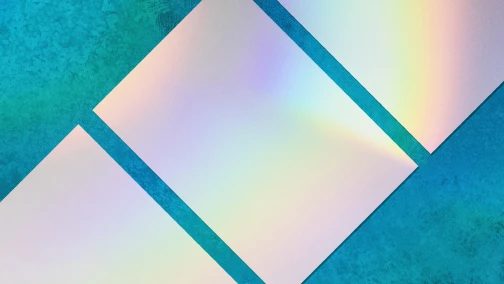
Holographic film, glitter, frosted matte, glow-in-the-dark and epoxy coating change how the panel catches light. Finishes can combine on one build, such as a holographic background layer behind a printed figure.
Standard slot bases, printed bases with matching artwork, bearing bases for rotating builds and multi-slot bases for layered scenes. Base and panel are cut as a matched pair so the fit is firm.
Panels and bases pack separately in protective bags to prevent scratches. Custom backing cards and retail boxes are available for shelf-ready merchandise.
| SPECIFICATION | DETAILS |
|---|---|
| MATERIAL | Cast acrylic (PMMA) sheet — high clarity, resists yellowing on long-term display |
| THICKNESS | Three, four or five millimeters, matched to panel height and build weight |
| PANEL SIZE | Three to ten centimeters on the longest side; larger display sizes on request |
| PRINTING | UV printing, single or double-sided; white ink layer for opaque color on clear stock |
| CUTTING | CNC die-cutting to any silhouette, edges polished smooth |
| STYLES | Standard single-layer, multi-layer, shaker and rotating standee builds |
| FINISH OPTIONS | Holographic, glitter, frosted matte, glow-in-the-dark, epoxy coating |
| BASES | Slot bases matched to each panel; printed, bearing and multi-slot bases available |
| MOQ | From ten pieces on standard builds; exact quantity confirmed per project |
| ARTWORK FILES | PSD, AI or PNG at print resolution, transparent background preferred |
| PROOFING | Free digital proof with cut lines and base slot before production |
| PACKAGING | Panel and base bagged separately; custom backing cards and boxes optional |
Beyond the artwork, buyers ask the same practical questions before a first order. This section covers how standees hold up on display, how assembly and reorders work, and what shapes the cost of a project.
A standee spends its life standing in light, which is exactly what cast acrylic handles well — the sheet keeps its clarity instead of yellowing the way cheaper extruded plastic does, and UV-cured ink bonds into the surface, so the artwork does not peel or flake like a surface sticker would. Dust is the main maintenance: a soft dry cloth keeps the panel clean. Avoid alcohol-based cleaners, which can cloud the acrylic surface over time.
The panel ships flat in its own protective bag, with the base packed alongside. Assembly takes seconds — seat the panel into the slot at a straight angle and press gently until it locks. The fit is firm by design; forcing the panel in at a tilt can crack the slot edge. Rotating builds arrive with the bearing base pre-fitted, and shaker builds arrive sealed, so no assembly is needed beyond the base.
Each batch prints from the same approved file under the same settings, and panels are checked against the confirmed proof before packing. As with any physical printing, bright RGB purples and neon tones print slightly deeper on acrylic than they look on screen. If a critical brand color is involved, flag it when sending the artwork and we will note the closest printable result on the proof.
Cut lines, base slots, print settings and the approved proof stay on file after the first run. Reordering takes a design name and a quantity; the setup stays on file, and the new run matches the previous batch. Most merch buyers work this way: a small first run to test a design, then repeat orders as it sells. Inactive designs remain confidential and are removed from our files on request.
Four choices decide the unit cost: panel size, thickness, printing sides and build style. Standard single-layer standees are the most economical; multi-layer, shaker and rotating builds add parts and assembly steps. Quantity moves the number the most — setup work spreads across the run, so bulk orders bring the per-piece cost down sharply. Share the artwork and a target quantity, and we will quote the build that fits the budget.
Panels and bases ship individually bagged to prevent surface scratches in transit, and the flat pack keeps freight cost low. For retail programs, we produce custom backing cards and printed boxes, so a bulk order arrives as shelf-ready merchandise rather than loose parts.
Most standee orders go wrong in the same places: a panel too thin to stand firmly, a base slot that does not match, or fine details that break after cutting. This guide walks through the choices in the order we work through them with buyers, so the first batch arrives right.
An acrylic standee has two parts: the panel and the base. The panel starts as cast acrylic sheet — optically clear PMMA chosen over extruded stock because it keeps its clarity on display for years. Artwork is printed with UV-cured ink that hardens instantly and bonds into the surface. A CNC engraving machine then cuts the panel along the character's silhouette and cuts the base slot to match, so the finished piece seats firmly and stands straight. Edges are polished after cutting, and hardware is fitted before packing.
The same artwork can become four different products. The table below compares the builds we produce.
| STYLE | STRUCTURE | DISPLAY EFFECT | BEST FOR |
|---|---|---|---|
| Standard | Single printed panel, slot base | Clean flat display | Core merch lines, first runs |
| Multi-layer | Two or more panels in stepped slots | Real depth between foreground and background | Scene artwork, premium editions |
| Shaker | Sealed frame with loose inner pieces | Movement when picked up or shaken | Cute, playful designs |
| Rotating | Panel on a bearing base | Spins a full circle | Double-sided character art |
Panels run from three to ten centimeters on the longest side. Six to eight centimeters is the common merch range — large enough to read character detail at arm's length, small enough to ship flat at low cost. Thickness follows the build: slim standard panels stand well at three millimeters, while taller panels, multi-layer builds and pieces with wide bases should go thicker for stability. Any thin protruding part — a sword, an antenna, a tail — needs enough width to carry its own weight, and we flag risky details on the proof.
A standee lives or falls by its base fit. Too loose, and the panel wobbles or tips; too tight, and seating the panel cracks the slot. Panel and base are cut as a matched pair from the same file, and the fit is checked on assembly before packing. Printed bases extend the artwork onto the display surface — a name, a logo or a scene element — and multi-slot bases hold layered builds in stepped depth.
We accept PSD, AI or high-resolution PNG files with a transparent background. Two details decide print quality: resolution, which keeps lines sharp at full size, and line weight, since details below about one millimeter can break during cutting or in daily handling. The cut line and base slot are set by our team from your artwork and confirmed on the digital proof — you approve the exact silhouette before anything is made.