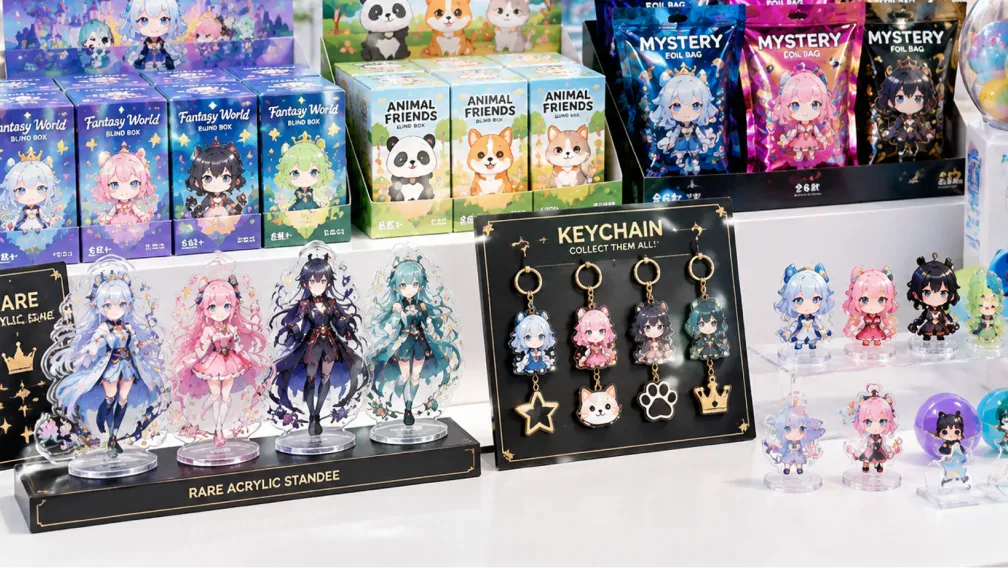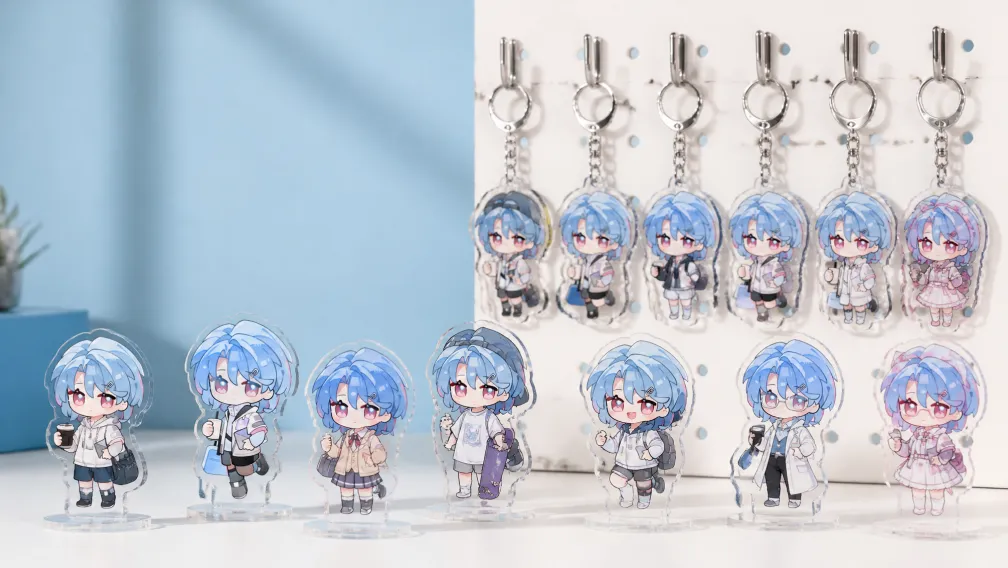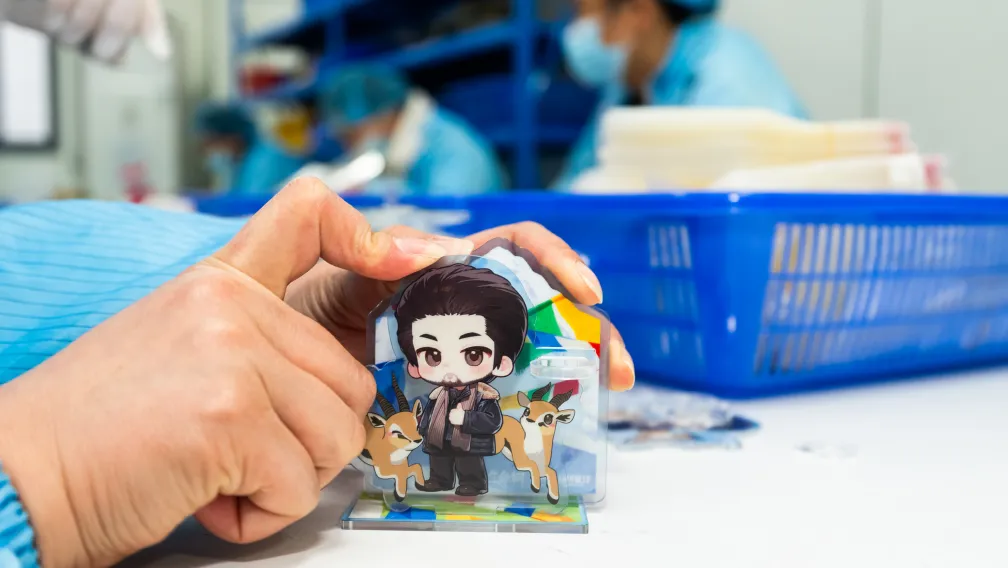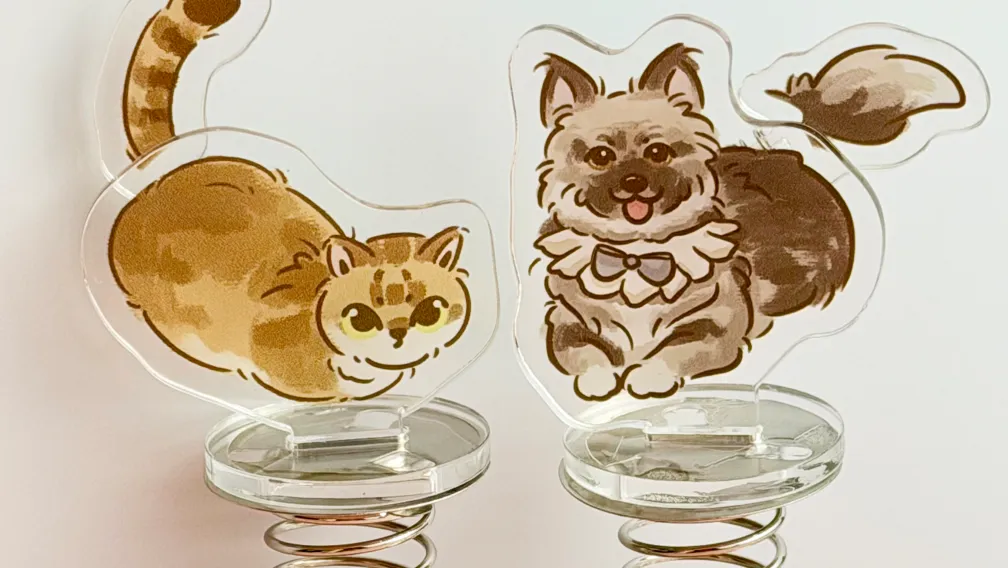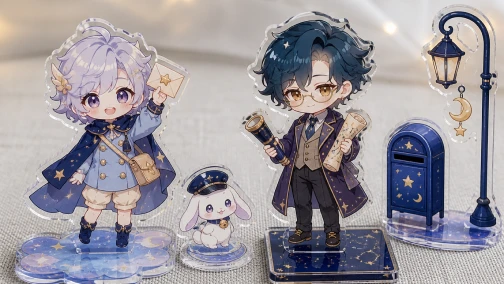
Custom acrylic standees represent a core volume driver in the anime merchandise, gaming collectibles, and experiential retail sectors. While aesthetic appeal dictates retail conversion, the structural integrity of a standee depends entirely on precision engineering at the factory level. A loose base slot causes the figure to lean or detach, while an overly tight slot risks cracking the acrylic panel during assembly. Achieving consistent fit across thousands of units requires strict management of material thickness, laser kerf compensation, and base tolerance parameters.
This guide examines the industrial engineering standards required for high-volume custom acrylic standee production. It covers cast PMMA material selection, UV printing architecture, laser cutting tolerances, base slot design protocols, and quality assurance frameworks that procurement professionals use to qualify manufacturing partners.
Material Engineering: Cast PMMA Selection and Thickness Standards
The structural performance of acrylic standees begins with the raw substrate. Professional manufacturing operations utilize cast polymethyl methacrylate sheets rather than extruded alternatives. Cast PMMA provides superior molecular weight distribution, resulting in higher tensile strength, better optical light transmission exceeding 92 percent, and cleaner laser-cut edges without thermal micro-crazing.
Standard commercial thickness for custom standees ranges from 3.0 mm to 4.0 mm for the primary character panel, while base components often utilize 4.0 mm or 5.0 mm sheets to provide a stable center of gravity. Thickness variation across a single production lot must remain within strict industrial tolerances. A nominal 3.0 mm cast sheet should exhibit a measured variance of no more than plus or minus 0.15 mm. Uncontrolled thickness variation directly compromises base slot retention, resulting in loose assemblies or insertion failures.
UV Printing Layer Architecture and Color Fidelity
High-end standee production relies on industrial UV flatbed printing technology. The visual depth of double-sided printed standees or single-sided designs with opaque backing depends on a precise multi-layer ink architecture executed in a single pass.
The Four-Layer Printing Sequence
Achieving opaque, vibrant character graphics on transparent acrylic requires a controlled layer sequence:
- Protective top varnish layer: Optional clear UV-curable coating applied to protect surface graphics against physical abrasion.
- Primary CMYK color layer: High-resolution front or reverse printing delivering the core artwork details at 1400 DPI or higher.
- Solid white ink underbase: An opaque white layer that blocks background transmission and ensures color saturation. For double-sided visible designs, a sandwich structure utilizes a second CMYK color layer beneath the white core.
- Secondary protective lacquer: Final seal protecting the white underbase from scratches during handling and laser finishing.
Precise registration between the color layer and the white underbase is critical. Misalignment exceeding 0.2 mm produces visible white halos along fine character outlines. Qualified manufacturing facilities utilize automated optical registration systems to eliminate layer shift during high-speed production runs.
Laser Cutting Precision and Base Slot Engineering
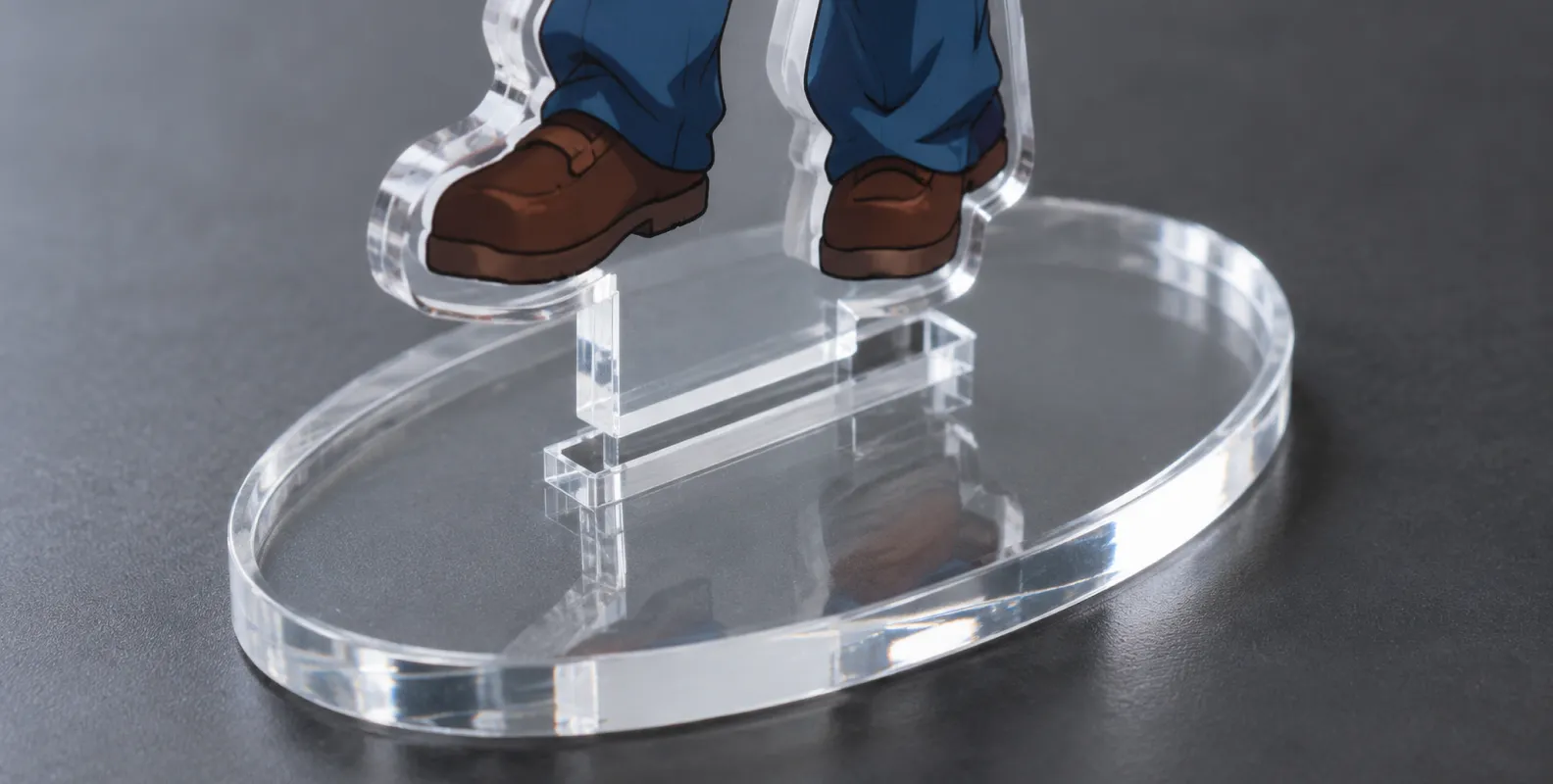
The intersection between the character foot tab and the base slot is the most mechanically demanding aspect of standee manufacturing. Designing this interface requires accounting for the laser cutting kerf and material shrinkage tolerances.
Kerf Compensation and Slot Clearance
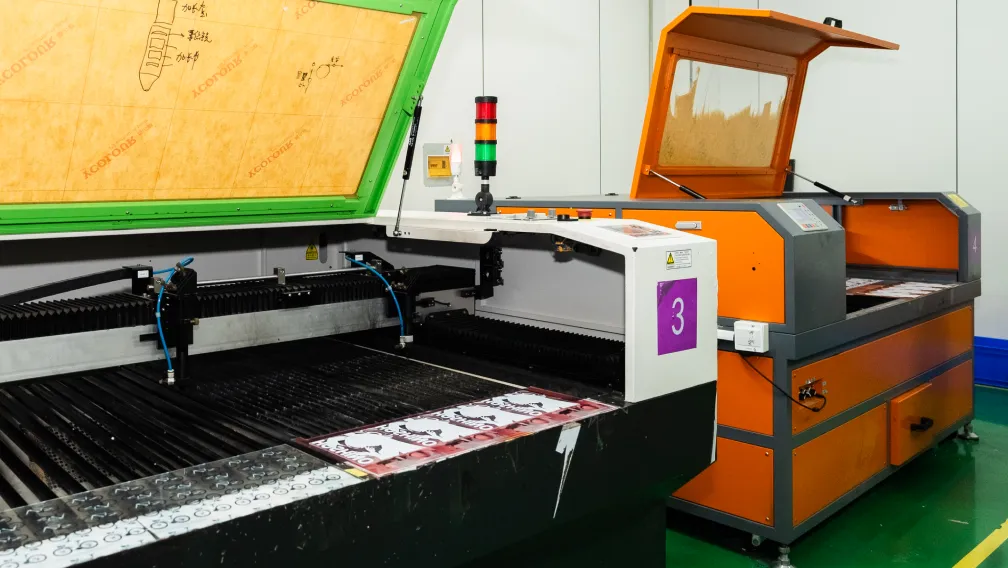
Industrial CO2 lasers remove material by thermal vaporization, creating a characteristic beam kerf width typically ranging from 0.1 mm to 0.2 mm. If CAD cut paths do not compensate for this kerf, base slots will deviate from programmed dimensions. For a nominal 3.0 mm acrylic panel, the corresponding base slot width must be engineered to exactly match the actual measured thickness of the inserted tab after accounting for ink deposition layers.
Allowable clearance tolerances for standee slots are tightly constrained:
- Standard slip-fit tolerance: Slot width set to measured tab thickness plus 0.05 mm to 0.10 mm, providing smooth manual assembly without wobbling.
- Interference limit: Deviations exceeding plus 0.2 mm result in loose structural joints, while negative deviations prevent assembly and induce stress fractures in the acrylic matrix.
Detailed technical guidelines for preparing vector cut paths and managing node reduction for complex standee outlines are outlined in our acrylic keychain artwork setup guide, which shares identical vector preparation principles with standee manufacturing.
Quality Assurance and Defect Prevention Protocols
Maintaining defect rates below 1 percent across large-scale merchandise orders requires a multi-stage inspection protocol integrated directly into the production workflow.
Incoming Material Inspection
Every lot of PMMA sheets undergoes optical clarity testing, surface flatness measurement using dial gauges, and thickness verification across multiple points on the sheet before release to the printing department.
In-Process and Post-Cutting QC
During laser cutting, operators perform destructive test assemblies using sample tabs to verify slot fit and insertion resistance. Finished panels undergo manual inspection for edge smoothness, absence of micro-chips, correct protective film application, and color accuracy against approved digital proofs under standardized D50 lightbox illumination. Surface defect standards and environmental tolerance thresholds are further detailed in our analysis of industrial acrylic quality control tolerances.
Commercial and Production Benchmarks for 2026
The table below outlines current operational benchmarks for sourcing custom acrylic standees from certified OEM manufacturing facilities.
| Parameter | Industrial Benchmark | Verification Requirement |
|---|---|---|
| Minimum Order Quantity (MOQ) | 50 to 300 pieces per design variant | Multi-design grouping flexibility |
| Sample Lead Time | 3 working days | Production-line sample verification |
| Mass Production Lead Time | 5 to 8 days after vector proof approval | Peak-season queue transparency |
| Dimensional Tolerance | Plus or minus 0.15 mm on thickness and slots | Incoming sheet inspection logs |
| On-Time Delivery Rate | 97 percent or higher | Historical fulfillment audit data |
| Compliance Standards | ISO 9001, BSCI, Sedex, Disney FAMA | Third-party certificate verification |
Working With Modori Works
Modori Works operates an advanced 10,000-square-meter manufacturing facility equipped with high-precision industrial UV printers, automated CO2 laser systems, and dedicated assembly lines. Holding ISO 9001, BSCI, Sedex, and Disney FAMA certifications, our production lines supply custom merchandise programs for global brands and independent creators.
Brands and procurement managers developing custom acrylic standees can request material compliance reports, physical samples, and engineering reviews prior to mass production. Our technical capabilities extend to multi-component items such as acrylic shaker standees and accompanying custom acrylic keychains. Submit your vector files for a complimentary engineering evaluation, and our technical team will provide a comprehensive feasibility report within 24 hours.
-

Modori Works Team
Custom B2B Merchandise Manufacturer
Authored by the engineering and production specialists at Modori Works. We share deep manufacturing insights, material breakdowns, and workflow guides to help global brands, artists, and event organizers bring custom acrylics, keycaps, and collectibles to life with strict IP protection.