In commercial retail management, increasing floor traffic requires significant marketing expenditure. Therefore, optimizing the revenue generated from the traffic already inside the store—specifically by elevating the Average Order Value (AOV) and accelerating inventory turnover—is the most efficient pathway to sustained profitability. Traditional deterministic merchandising, where a consumer selects and purchases a single known item, inherently limits basket size.
To break this ceiling, leading entertainment licensors, pop-culture brands, and high-volume D2C retailers have systematically transitioned portions of their catalogs toward randomized purchasing models: blind boxes, gacha capsule toys, and blind foil bags. Implementing these mechanics fundamentally alters consumer purchasing behavior, transitioning a single-item transaction into a multi-unit collection pursuit. This guide examines the structural advantages of randomized merchandising, the operational impact on SKU rationalization, and the rigorous industrial packaging requirements necessary to execute a successful blind-box product line.
The Mechanics of Randomized Merchandising
Randomized merchandise relies on the psychological drive for completion and the anticipation of acquiring a rare variant. By obscuring the exact design inside the packaging, retailers introduce a gamified element to the transaction.
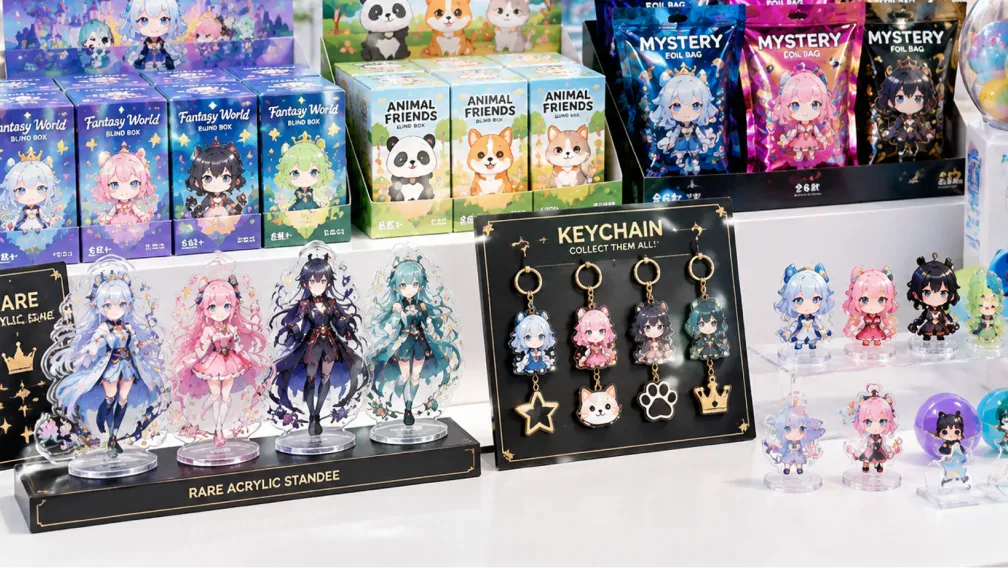
In a standard retail environment, a consumer who favors a specific character will locate that character's keychain, purchase it, and conclude the transaction. In a blind-box ecosystem, the consumer is presented with a "series" containing multiple standard designs and one or two elusive "chase" or "secret" designs. To acquire their preferred character, or to complete the entire series lineup, the consumer is structurally incentivized to purchase multiple units simultaneously. This mechanic substantially elevates the Average Order Value (AOV) at the point of sale without requiring any additional retail square footage.
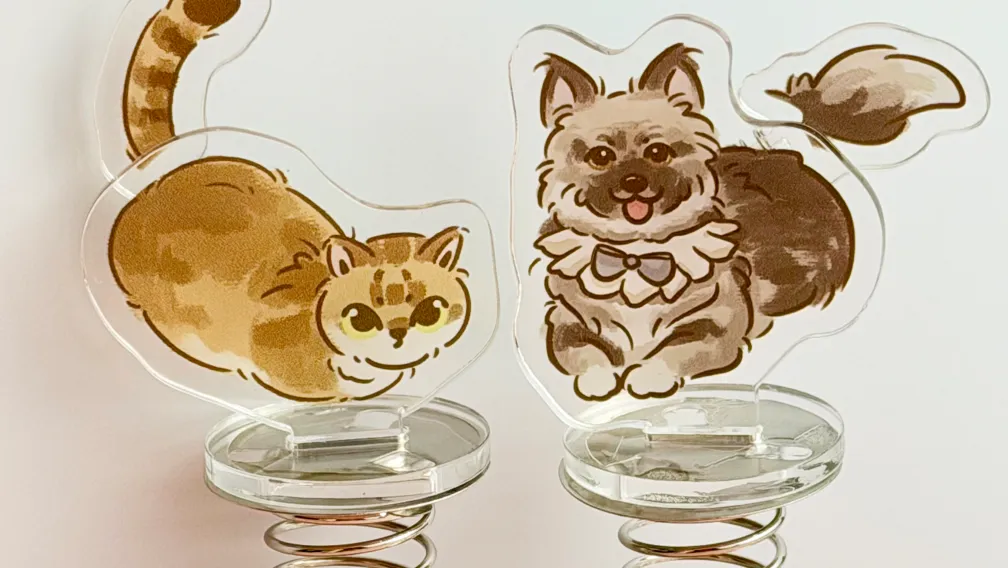
Furthermore, this strategy introduces the "Ichiban Kuji" or tiered lottery (Gacha) system. In these setups, lower-tier prizes consist of randomized small goods, while higher-tier prizes are larger, premium items. Retailers utilize high-density premium items, such as large-format custom acrylic standees or heavy displays, as the ultimate "A-Prize" incentive, driving repeated ticket or capsule purchases from dedicated brand collectors.
SKU Consolidation and Dead Stock Mitigation
Beyond point-of-sale revenue, the most significant operational advantage of blind-box manufacturing is its impact on inventory management and dead stock reduction.
Consider a retail brand launching a collection of 12 distinct character designs. Under a deterministic retail model, this requires generating and tracking 12 independent Stock Keeping Units (SKUs). Inventory velocity will inevitably fracture; the most popular characters will sell out rapidly, leaving the retailer with empty shelf space and missed revenue, while the least popular characters languish as dead stock, tying up working capital and eventually requiring heavy markdowns.
Blind packaging solves this discrepancy through SKU consolidation. The entire 12-design collection is grouped under a single, unified SKU (e.g., "Series 1 Blind Box"). The retail buyer and the 3PL warehouse only need to track and reorder one product line. More importantly, the undesirable "dead stock" designs are seamlessly subsidized by the highly desirable designs within the sealed randomization pool. The entire inventory clears at a uniform, predictable rate, drastically improving overall stock turnover metrics.
Ideal Product Categories for Blind Box Integration
Not all merchandise formats are suitable for randomized packaging. The most successful blind-box programs utilize high-margin, dimensionally standardized products that can be rapidly produced and securely sealed.
1. Foil-Bagged Button Pins
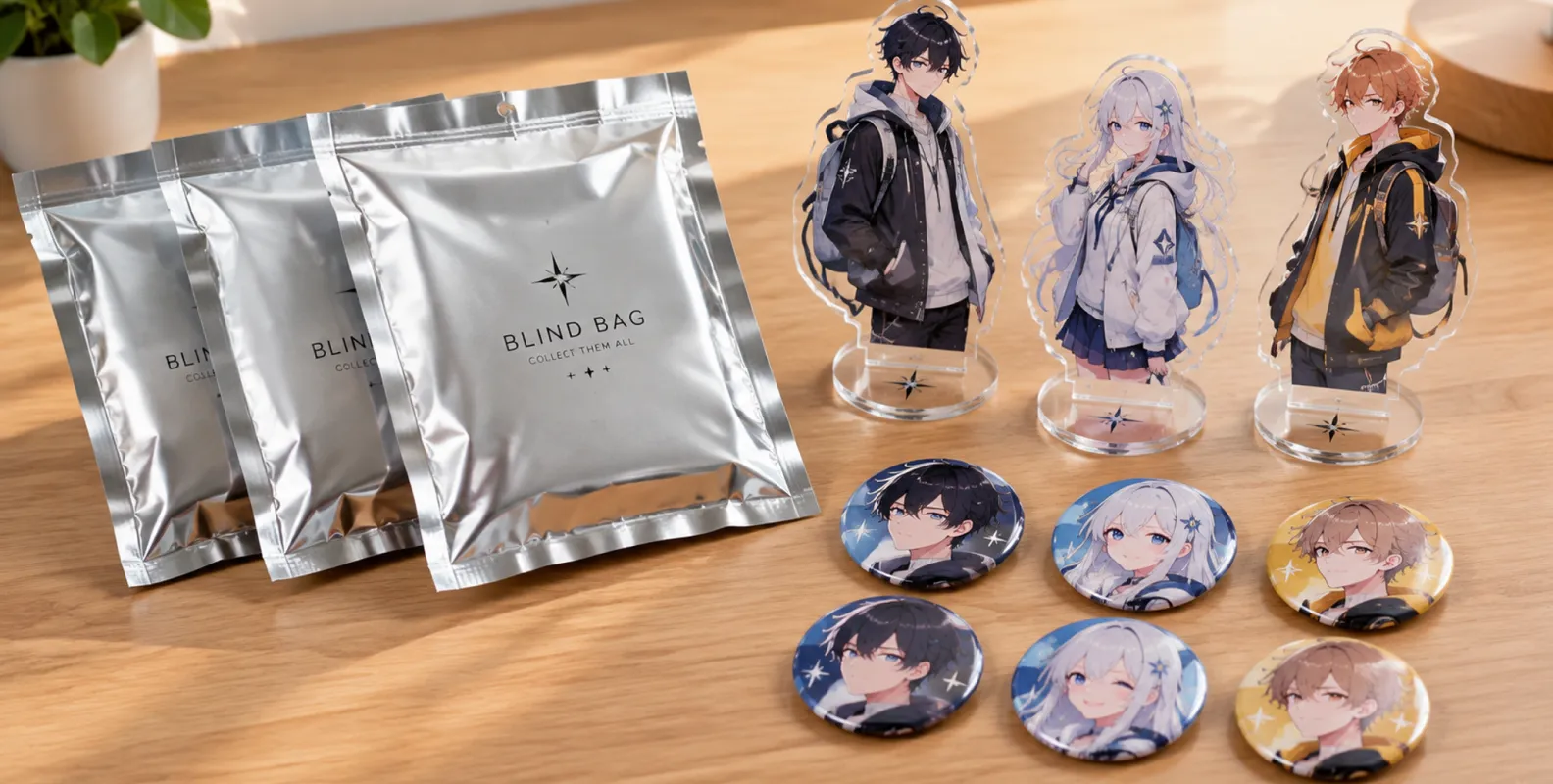
Pins are the optimal entry-level product for high-volume randomized retail. The manufacturing tooling for pins is entirely standardized (e.g., universal 58mm circular molds). This allows a brand to print 20 different character illustrations without altering the physical manufacturing footprint. Custom button pins are easily sealed into opaque foil flow-wrap bags. Their low unit cost allows retailers to position them as impulse add-ons at the checkout counter, capturing the remaining discretionary spend of waiting shoppers.
2. Booster Packs and Trading Cards
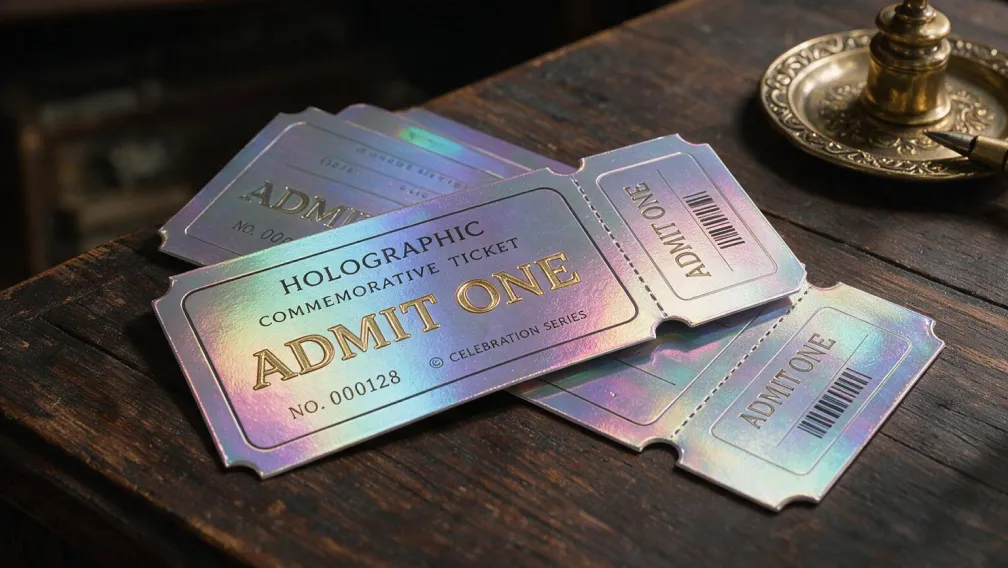
The Trading Card Game (TCG) industry represents the absolute pinnacle of randomized retail mechanics. Booster packs are inherently designed for high-velocity turnover. By integrating specialty holographic foils, varying rarity tiers, and localized embossing into custom trading cards, brands can generate massive consumer demand in an exceptionally compact retail footprint. Cards are lightweight, inexpensive to ship in bulk, and boast the highest repeat-purchase rate of any merchandise category.
3. Miniature Acrylic Collectibles
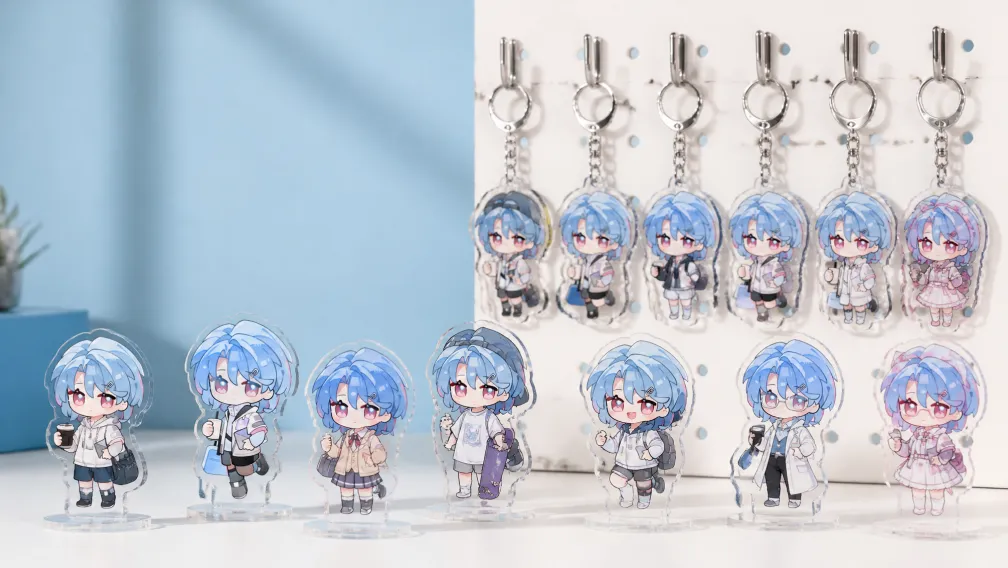
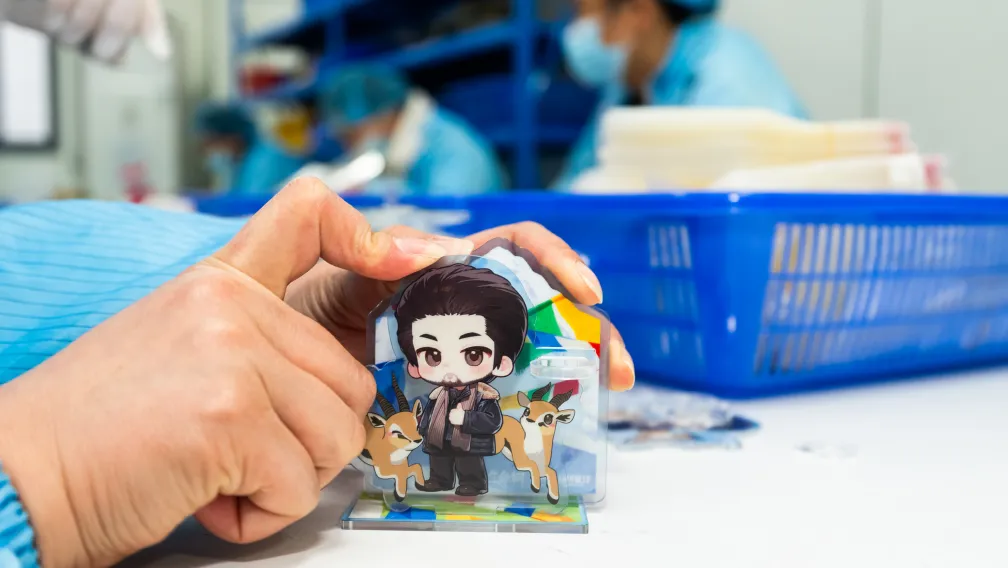
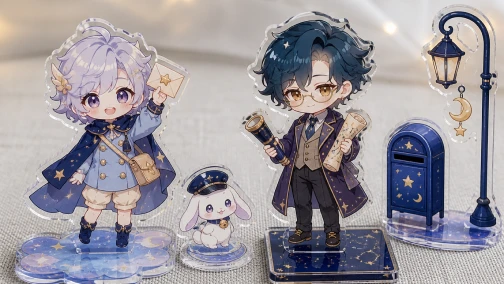
For mid-tier pricing brackets, brands frequently deploy miniature custom acrylic keychains or small desktop charms housed in standardized cardboard blind boxes or spherical gacha capsules. To elevate the perceived value of these small items, brands often incorporate interactive elements or premium finishes, ensuring that even if a consumer pulls a common design, the physical quality of the acrylic justifies the retail price point.
Industrial Manufacturing and Packaging Integrity
Executing a blind-box or blind-bag product line requires far more than simply printing merchandise. The integrity of the entire sales program depends entirely on the factory’s ability to guarantee true randomization while preventing consumers from identifying the contents prior to purchase. If collectors discover a method to identify rare items from the exterior, they will cherry-pick the high-value units, leaving the remaining inventory virtually unsellable.
Opaque Foil Flow-Wrapping
Standard paper envelopes or thin plastics are inadequate for blind packaging; high-intensity retail store lighting can often penetrate these materials, revealing the silhouette or colors of the item inside. Professional OEM factories utilize multi-layer laminated films, typically combining PET (Polyethylene Terephthalate), an Aluminum (AL) light-blocking foil layer, and a PE (Polyethylene) sealing layer. This composite structure guarantees 100% opacity and provides a hermetic seal that prevents physical tampering.
Weight Variance Thresholds and Balancing
Dedicated collectors frequently bring digital gram scales into retail stores to weigh blind boxes, attempting to isolate heavier "chase" figures or special multi-layered items. If a rare holographic pin weighs 2 grams more than a standard pin, the randomized mechanic is compromised.
Industrial quality control requires strict weight balancing. During the factory packaging phase, precision scales measure each unit. If dimensional differences between designs create weight discrepancies, factories insert calibrated, blank cardstock fillers of varying weights into the foil bags. This precise balancing ensures that every single unit in a retail display carton weighs exactly the same, neutralizing weight-based cherry-picking.
Algorithmic Collation Protocols
True mathematical randomization is actually disastrous for retail. If a display case of 12 boxes is truly random, a consumer buying a sealed case might receive 8 identical common items and zero rare items, leading to severe brand dissatisfaction and refund requests.
Professional manufacturing relies on controlled collation. The packaging line is programmed to ensure a specific, guaranteed distribution within every master display case. A standard protocol ensures that a sealed display case containing 12 blind boxes will yield exactly one complete set of standard designs, or a guaranteed ratio of common-to-rare pulls. This collation must be executed flawlessly on the automated packing line before the display case is shrink-wrapped.
Barcoding and Retail Distribution Compliance
For chain stores and corporate retailers, barcoding randomized merchandise requires a specific structural approach. Because all individual blind boxes within a series share the same SKU, every single individual blind box or foil bag must bear the exact same UPC/EAN barcode. The retail point-of-sale scanner does not care which character is inside; it only registers the sale of "Series 1 Unit."
However, the outer master display carton (which holds 12 or 24 individual blind units) requires a different, distinct barcode. This allows warehouse staff to scan and ship an entire sealed display case to a consumer or a retail branch without the inventory system registering it as the sale of just a single small box.
Securing a Capable OEM Partner
Transitioning to a blind-box or gacha retail strategy requires a manufacturing partner capable of executing rigorous collation, automated foil wrapping, and precision weight balancing under a single roof. Utilizing separate facilities for product manufacturing and randomized packaging introduces severe logistical risks and compromises the secrecy of the collation ratios.
Modoriworks serves as the primary integrated manufacturer for international brands executing complex randomized merchandise campaigns. We engineer the complete lifecycle of custom merchandise products, from precision acrylic and metal fabrication to automated, secure blind packaging and retail-ready carton distribution. Review our extensive production cases to see our execution of multi-tier randomized retail rollouts, or learn more about Modoriworks and our automated packaging capabilities.
To discuss collation ratios, foil packaging specifications, and weight balancing for your upcoming retail catalog, consult our manufacturing FAQ or contact our enterprise sales engineering team today to optimize your next major product launch.
-

Modori Works Team
Custom B2B Merchandise Manufacturer
Authored by the engineering and production specialists at Modori Works. We share deep manufacturing insights, material breakdowns, and workflow guides to help global brands, artists, and event organizers bring custom acrylics, keycaps, and collectibles to life with strict IP protection.