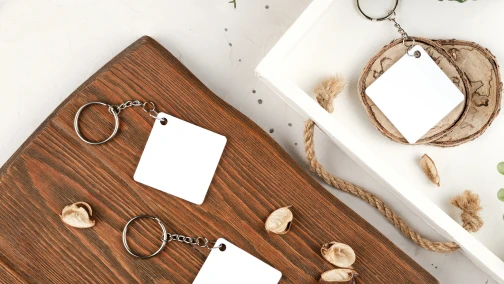
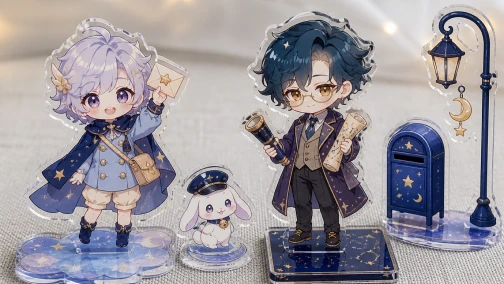
Custom acrylic keychains turn original artwork into durable, pocket-sized merchandise. Each piece is produced from cast acrylic sheet, printed with UV-cured ink and cut by CNC to the exact silhouette of the design — from simple circles to complex character outlines. The range covers standard printed keychains, shaker keychains, epoxy-coated pieces, holographic and glitter finishes, and mini CD keychains.
This line serves artists, merch brands, IP licensors, wholesalers and event organizers who need consistent quality from trial runs up to bulk volume. Artwork checks, cut-line setup and digital proofing are handled before production, so the finished batch matches the approved design.


Six decisions cover a full keychain project. Each option below is quoted and confirmed before production, so there are no surprises between proof and bulk.
Sizes run from three to ten centimeters on the longest side, in three, four or five millimeter thickness. Thicker cast acrylic sheet gives a heavier, more premium feel; thinner cast acrylic sheet keeps large designs light.
CNC cutting follows any silhouette — character outlines, logos or abstract shapes. Keep small details above one millimeter so they survive cutting and daily use.
Print one side with a white ink backing, mirror the same art on both sides, or run two different designs front and back. Double-sided printing keeps the piece readable from any angle.
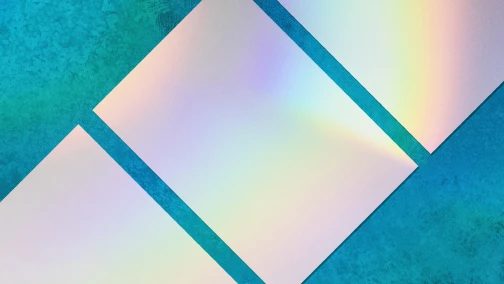
Holographic film, glitter layer, epoxy dome, frosted matte and glow-in-the-dark finishes change how the art catches light. Finishes can be combined on one design.
Split rings, lobster clasps, ball chains, phone straps and colored keyrings are available. The attachment hole position is set during cut-line setup.
Individual OPP bags come standard. Custom backing cards, branded headers and gift boxes can be produced for retail-ready merchandise.
| SPECIFICATION | DETAILS |
|---|---|
| MATERIAL | Cast acrylic (PMMA) sheet — higher clarity and scratch resistance than extruded acrylic sheet |
| THICKNESS | Three, four or five millimeters, matched to design size and handling feel |
| SIZE RANGE | Three to ten centimeters on the longest side; other dimensions on request |
| PRINTING | UV printing, single or double-sided; white ink layer for opaque color on clear stock |
| CUTTING | CNC die-cutting to any custom silhouette, edges polished smooth |
| FINISH OPTIONS | Holographic, glitter, epoxy dome coating, frosted matte, glow-in-the-dark |
| ATTACHMENTS | Split ring, lobster clasp, ball chain, phone strap, colored keyring |
| MOQ | Low minimum on standard printed designs; exact quantity confirmed per project |
| ARTWORK FILES | PSD, AI or PNG at print resolution, transparent background preferred |
| PROOFING | Free digital proof with cut lines before production; physical samples available |
| PACKAGING | Individual OPP bag standard; custom backing cards and gift packaging optional |
Beyond the design itself, buyers tend to ask the same practical questions before a first order. This section covers how the pieces hold up in use, how reorders work, and what shapes the cost of a project.
An acrylic keychain lives a hard life — it rubs against keys, coins and phone screens every day. Cast acrylic handles this well: the surface resists scratching far better than extruded plastic, and UV-cured ink bonds into the top layer of the sheet, so the artwork does not peel or flake off the way a surface sticker would. For designs that see heavy handling, an epoxy coating adds a sealed resin layer over the print and extends the clean look of the piece. The one care tip worth passing to your customers: keep the piece away from alcohol-based cleaners, which can cloud the acrylic surface.
Each batch is printed from the same approved file under the same settings, and pieces are checked against the confirmed proof before packing. Minor tonal shift between screen and print is normal with any physical printing — bright RGB purples and neon tones print slightly deeper on acrylic. If your design depends on a critical brand color, say so when you send the artwork and we will flag the closest printable result on the proof.
Your cut lines, print settings and approved proof are kept on file after the first run. A reorder needs only the design name and quantity — no new setup, and the new batch matches the last one. This is how most of our merch buyers work: a small first run to test a design, then repeat orders as it sells. Files belonging to inactive designs stay confidential and are deleted on request.
Four choices decide the unit cost: size, thickness, printing sides and finish. Larger and thicker pieces use more material; double-sided printing adds a second print pass; special finishes add a process step. Quantity moves the number the most — setup work is spread across the run, so bulk orders bring the per-piece cost down sharply. Send your artwork with a target quantity and we will quote the setup that fits your budget.
Pieces ship individually bagged as standard, which keeps surfaces clean in transit and makes the batch ready to hand out or sell loose. For retail programs, we produce custom backing cards printed with your branding, so a bulk order arrives as shelf-ready merchandise rather than loose parts.
Most problems with custom keychain orders come from decisions made before the artwork is sent: the wrong printing side, a finish that fights the art, or details too small to cut. This guide walks through the choices in the order we work through them with buyers.
The body is cast acrylic sheet — the same optically clear PMMA used for display cases and signage — chosen over extruded acrylic sheet because it keeps its clarity, resists yellowing and takes ink better. Artwork is printed with UV-cured ink that hardens instantly under ultraviolet light, bonding the image to the surface. A CNC engraving machine then cuts the printed sheet along the cut line, and the edges are polished so the silhouette feels smooth in hand. An attachment hole and hardware — split ring, clasp, chain or strap — finish the piece.
This is the first decision on any keychain order, and it changes both cost and how the piece behaves in use.
| COMPARISON | SINGLE-SIDED | DOUBLE-SIDED |
|---|---|---|
| Construction | Artwork on the front, white ink backing behind it | Artwork on both sides, mirrored or independent designs |
| Best for | Flat display, packaging cards, budget runs | Daily-use keychains that spin and flip |
| Artwork need | One design file | One file (mirrored) or two files (independent sides) |
| Buyer trend | Common for event giveaways | Standard for artist and fan merchandise |
Finishes change how light hits the artwork, and the wrong one can bury a good design. Holographic film breaks light into shifting rainbow tones and suits vivid, high-energy art. A glitter layer adds sparkle while keeping the print underneath readable. An epoxy dome raises the surface into a smooth lens, deepening colors and adding scratch protection. Frosted matte softens the piece for quiet, minimal styles. Glow-in-the-dark material charges in light and glows green in the dark — a novelty finish that sells well at night events. When a design carries fine linework or small text, keep the finish subtle; heavy films fight detail.
Sizes run from three to ten centimeters on the longest side. Five to seven centimeters is the common merch range — large enough to show character detail, small enough to carry. Thickness comes in three, four or five millimeters: thinner acrylic material keeps big designs light on the keys, thicker acrylic material gives small charms a heavier, more premium hand feel. Anything with thin protruding parts, like weapon props or animal ears, should go thicker for strength.
Send PSD, AI or PNG at print resolution with a transparent background. Two details decide whether a file prints well: resolution, which keeps lines sharp at full size, and line weight, since details below about one millimeter can break during cutting or wear in use. The cut line itself does not need to be drawn — our team sets it from the artwork and confirms it on the digital proof, along with the attachment hole position.