Commercial leasing reports and retail trade analytics from late August and early September 2026 confirm a profound operational transformation across North American, European, and Asian retail corridors. Experiential pop-up stores, character-themed collaboration cafés, and limited-window mall activations have evolved from promotional novelties into the primary revenue engines for major entertainment franchises, gaming publishers, and corporate IP licensors.
For corporate purchasing departments, retail chain buyers, and high-volume brand agencies, managing these short-run, high-turnover retail footprints requires a total reassessment of product mix economics. Traditional merchandise rosters dominated by rolled paper posters and basic printed apparel are increasingly discarded. Modern retail operators are systematically shifting their procurement capital toward high-density, rigid tabletop collectibles that maximize revenue per square foot, eliminate shipping damage, and deliver immediate visual prestige. This industry briefing examines the structural factors behind this merchandising pivot and outlines optimal sourcing strategies for the upcoming fall retail cycle.
The Commercial Imperative: Maximizing Revenue Per Square Foot
Pop-up retail economics are defined by tight temporal windows and premium prime-location commercial rents. Operating an experiential footprint in high-foot-traffic metropolitan districts requires commercial lease commitments that demand exceptionally high turnover efficiency. Every square foot of retail floor space must generate quantifiable revenue.
Standard apparel requires significant footprint allocation: inventory necessitates multi-tier stockroom storage to accommodate full size runs (S through 3XL), while sales floors require dedicated display racks and changing areas. Conversely, traditional rolled paper art prints are highly susceptible to corner dings, edge creases, and customer handling damage, driving retail write-off rates above 8% in fast-paced retail environments.
In response, store planners in September 2026 are standardizing on rigid desktop formats. Desktop display items occupy minimal shelf volume, require zero sizing stratification, and can be merchandised vertically on illuminated acrylic tier risers. This density allows store managers to achieve 3x to 5x greater inventory value per square meter of retail fixture space while simultaneously driving up transaction velocity.
Product Category Transformation: The Shift to Rigid Displays
Procurement records across international licensing agencies highlight three specific collectible categories capturing the largest share of retail manufacturing budgets heading into the final quarter of 2026.
1. Multi-Component Acrylic Dioramas
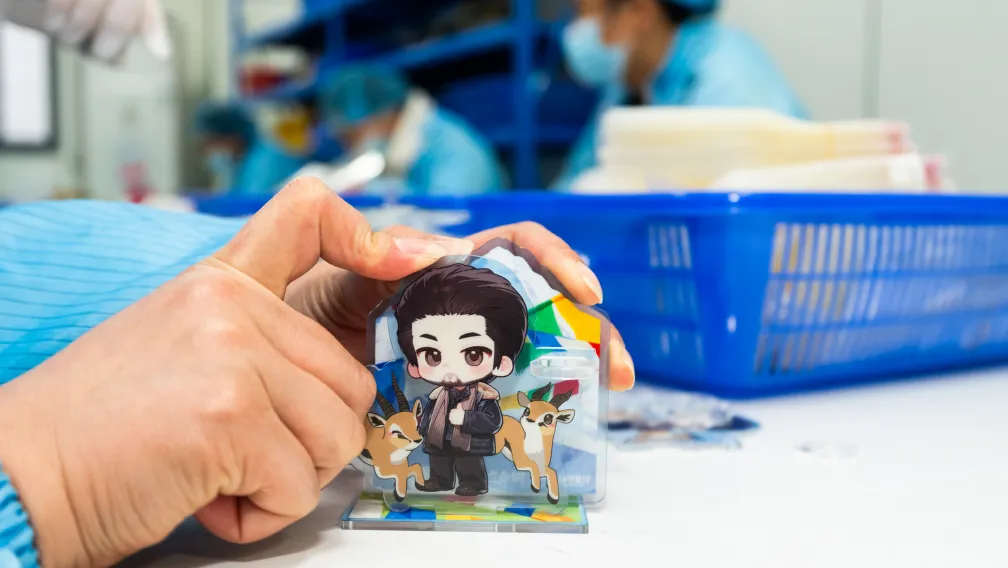
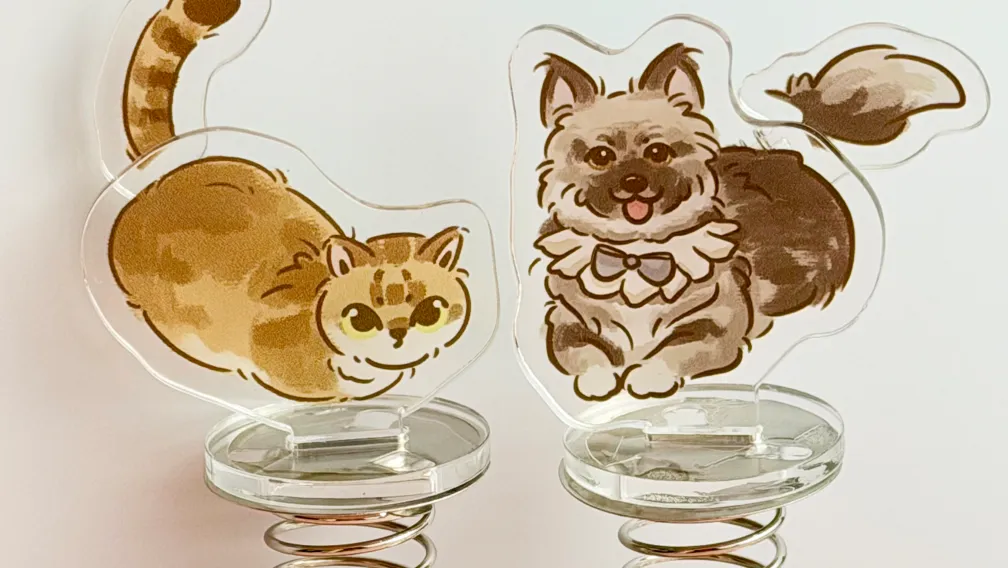
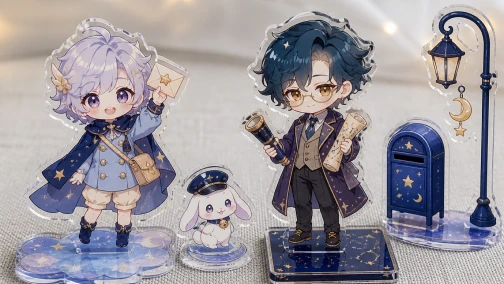
Standard flat character cutouts are increasingly viewed as entry-tier commodities. High-traffic brand activations are prioritizing complex, multi-tiered custom acrylic standees and dioramas. These assemblies incorporate interlocking foreground, midground, and background plates mounted onto weighted, precision-routed base plinths.
Because they function as permanent, premium desktop sculptures, consumers routinely accept retail pricing between $35.00 and $60.00 for these pieces. For retail buyers, this translates to strong gross margin capture without increasing the footprint required in warehouse backrooms or freight containers.
2. Heavy Acrylic Blocks as Anchor Collectibles
In flagship collaboration stores, merchandise designers require an "anchor product" that conveys absolute luxury. The industry standard has decisively shifted toward 20mm to 30mm diamond-polished custom acrylic blocks. Utilizing optical-grade cell-cast acrylic with high-definition UV white-backed printing, these freestanding blocks possess substantial physical heft (often weighing between 400g and 800g).
Their sheer mass prevents accidental tipping on crowded retail shelves, and their crystal-clear refractive edges create a self-illuminating display under retail halogen lighting. They serve as ideal high-ticket centerpieces, allowing licensing agencies to anchor their pricing tiers at the $50.00 to $80.00 price tier.
3. Shikishi Art Boards Replacing Rolled Wall Decor
The fastest-growing segment in commercial art collectibles is the traditional Japanese shikishi board adapted for modern industrial printing. Rather than selling loose art prints that require secondary framing by the consumer, retailers are stocking custom shikishi boards featuring metallic hot-stamp foil edging and rigid multiply core construction.
Shikishi boards present zero packaging deformities, can be browsed safely by thousands of shoppers in open-face retail display bins, and can be merchandised directly on miniature desktop easels. This format offers high perceived collectible value at retail price points of $18.00 to $28.00, achieving superior turnover metrics compared to standard poster merchandise.
Point-of-Sale Architecture: Impulse Mechanics and Collectible Cards
Maximizing the Average Order Value (AOV) in high-traffic retail environments relies heavily on optimizing checkout counter architecture. Data from September 2026 demonstrates that successful pop-up operations allocate up to 30% of their total merchandise floor budget to POS impulse products.
To capture remaining discretionary spend while customers queue at the register, retailers deploy compact display fixtures stocking limited-edition custom acrylic keychains featuring specialty finishes such as epoxy resin doming or fractured-glass holographic overlays. These small-format impulse items convert waiting shoppers into secondary purchasers.
Simultaneously, the widespread integration of blind-foil packaging has created massive demand for specialized custom trading cards and PVC collectible cards. Commercial pop-up venues use these cards both as retail blind packs (encouraging multi-pack set completion) and as promotional "gift-with-purchase" incentives to hit targeted basket thresholds (e.g., "Receive an exclusive holographic card with every $50 purchase"). The low unit manufacturing cost paired with high collectibility provides immediate margin leverage for the operating brand.
Supply Chain Resilience: Mitigating the Compressed Window
The primary vulnerability of pop-up retail is supply chain timing. Because pop-up stores operate within rigid calendar windows—often lasting only 14 to 30 days—a production delay of one week can destroy the commercial viability of the entire campaign.
To eliminate this exposure, enterprise buyers are establishing direct relationships with primary OEM manufacturers rather than working through domestic sourcing intermediaries. Sourcing directly provides significant operational advantages:
- Precision Production Scheduling: Brand agencies can lock in dedicated factory capacity months in advance, coordinating production release schedules directly with retail store openings.
- Substrate Color Matching: Operating a unified merchandise lineup requires precise color consistency. Manufacturing standees, keychains, and art boards within the same facility ensures that CMYK color profiles and brand PMS standards match across disparate acrylic, paper, and metal substrates.
- Retail-Ready Packaging Compliance: Commercial retailers require pre-applied EAN/UPC barcode labeling, localized warning notices, and retail peg-hole packaging. Professional factories integrate these requirements on the automated packaging line, eliminating expensive third-party repacking fees upon domestic receipt.
Executing Scalable Retail Manufacturing with Modoriworks
Navigating the exacting standards of experiential merchandising demands a manufacturing partner with industrial hardware, rigorous quality management, and deep familiarity with global retail supply chains.
Modoriworks operates as a primary OEM and ODM manufacturer supporting international brands, entertainment agencies, and retail conglomerates. We maintain industrial CNC routing arrays, automated cleanroom UV assembly lines, and calibrated die-cutting equipment capable of executing massive production runs under zero-defect tolerances. Prospective commercial partners are invited to explore our corporate infrastructure and quality certifications by reading about Modoriworks, or reviewing our verified commercial execution across our documented production cases.
To review our industrial capacity, lead-time buffering, and volume tier structures, consult our manufacturing FAQ or contact our enterprise procurement team today to ensure your upcoming retail activations are engineered for maximum commercial profitability.
-

Modori Works Team
Custom B2B Merchandise Manufacturer
Authored by the engineering and production specialists at Modori Works. We share deep manufacturing insights, material breakdowns, and workflow guides to help global brands, artists, and event organizers bring custom acrylics, keycaps, and collectibles to life with strict IP protection.