Funko reported its third-quarter 2026 results on November 5, and the numbers matter less than the strategy disclosures around them. Net sales rose 3.0% year over year to $258.3 million, Core Collectibles grew 4.8%, gross margin expanded five points to 45.2%, and adjusted EBITDA reached $32.1 million, well above guidance. Buried inside the earnings call, however, were three operational signals that should redirect how brands, IP holders, and OEM manufacturers plan collectibles programs for 2027: a rarity-based product format that sold out completely, a production model built around speed rather than scale, and a retail channel that did not exist in Funko's mix two years ago.
The Quarter in Brief
Funko's Q3 headline figures describe a company trading volume for profitability. Core Collectibles, the category covering Pop! figures and related lines, grew 4.8% to $210.1 million, while Loungefly declined 9.8% as management deliberately cut SKU count to concentrate assortment behind proven sellers. Geography split sharply: United States sales fell 2.4% while Europe grew 11.5% and other international markets grew 12.1%. Global point-of-sale units slipped 4% in the quarter, with the US down 10% and EMEA up 16%, though year-to-date POS remains up 3%. Full-year guidance was reiterated: net sales flat to up 3%, gross margin of 46 to 47%, and adjusted EBITDA of $100 to $110 million, figures that include a $25.4 million tariff-related benefit booked in Q2.
For supply chain planners, the tariff line deserves attention. A disclosed eight-figure tariff benefit in a single quarter confirms that duty exposure remains a material variable in collectibles sourcing economics, and Funko's own commentary tied last year's US comparison weakness to inventory timing after tariff disruption. Import programs into North America should treat tariff scenarios as a standing line item in landed-cost models through 2027.
Signal One: Pop! Mystery Validates Rarity-Based Formats at Scale
The most commercially significant disclosure was the launch performance of Pop! Mystery, Funko's rarity-driven format, which management described as exceeding internal expectations with a 100% sell-through rate and a sell-through pace three times faster than projected. When the largest company in licensed collectibles reports that a mystery format cleared inventory completely on launch, the blind and chase model moves from experiment to core category.
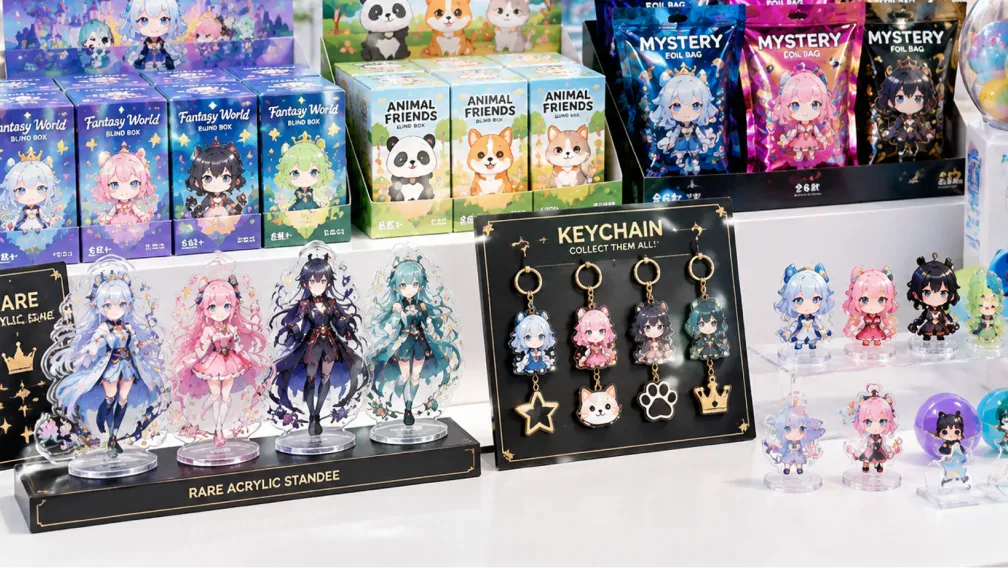
This validation lands on top of a pattern already visible across the industry. Blind-box collectibles anchored the trendy-toy zones at October's China Licensing Expo in Shanghai, and Publishers Weekly reported the first blind-box collectible built around a graphic novel the same month. The manufacturing consequence is concrete: mystery formats convert packaging from a protective layer into a product feature. Programs in this category require sealed, tamper-evident units, randomized assortment ratios that hold up under statistical audit, and chase-piece controls documented at the packing line. Buyers scoping 2027 mystery programs should treat assortment integrity as a written production specification, verified with the same rigor as print registration or dimensional tolerance.
Signal Two: The Hyperstrike Model Compresses the Trend-to-Shelf Window
Funko described its Make Culture Pop! strategy as running on a Hyperstrike engine designed to shorten the window between a cultural moment and product delivery, using onshore production for speed-critical items to bypass overseas shipping delays. The direction of travel here matters more than any single quarter's margin. The collectibles business is reorganizing around speed: sense demand earlier, produce fast on short runs, and replenish winners while the cultural moment is still active.
The financial results support the same read. Gross margin at 45.2%, up five full points year over year, reflects a mix deliberately shifted toward higher-quality sales rather than deeper discounts, and management confirmed that direct-to-consumer unit declines of 13% came from intentionally reduced promotional activity. Volume chasing is out; speed and scarcity economics are in.
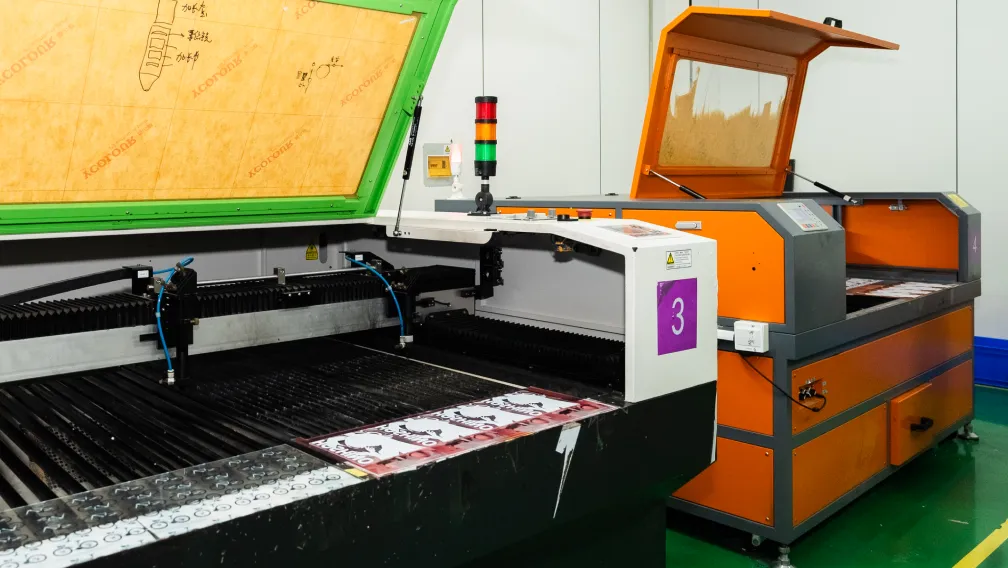
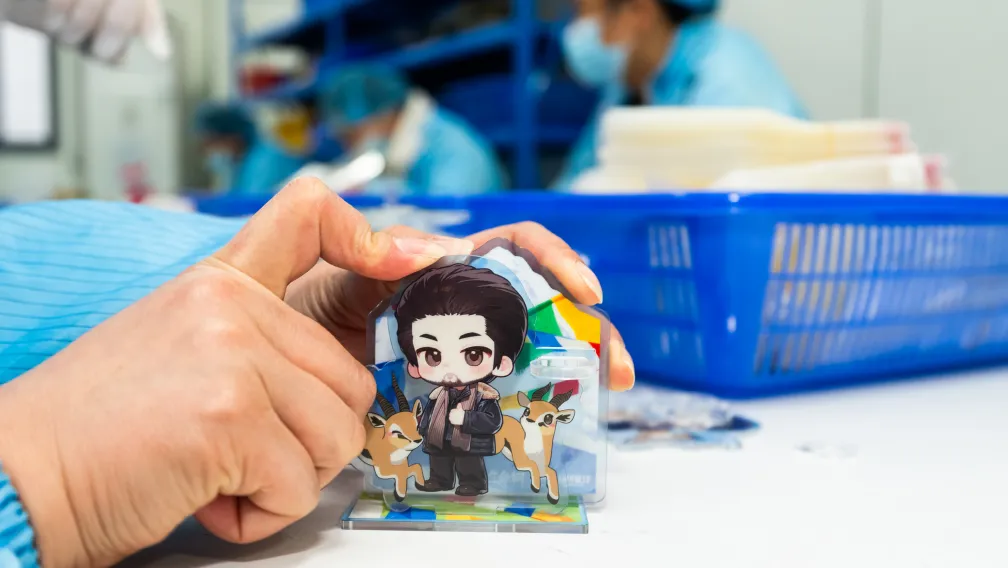
For brands sourcing from overseas factories, the Hyperstrike logic does not eliminate offshore production; it redefines what offshore partners must deliver. The practical requirements are rapid sampling measured in days, production data retention so reorders skip re-engineering, and capacity that can flex into a trend-driven reorder without a full procurement cycle. Factories that archive approved cutting outlines, color profiles, and material specifications from a client's first run can turn a replenishment order around in a fraction of the original lead time. Buyers qualifying suppliers this quarter should ask explicitly how artwork, tooling data, and QC records are retained between runs, because that retention policy now determines whether a restock captures a demand window or misses it entirely.
Signal Three: Live Commerce Enters the Collectibles Retail Mix
Funko disclosed that it completed its third TikTok live-selling test at its Hollywood store, met directly with TikTok's head of collectibles for commerce, studied the more developed live-shopping ecosystem in China, and plans to scale the channel through Q4 and into 2027, alongside learnings from its eBay Live partnership. Live commerce converts product launches into scheduled broadcast events, and that shift carries inventory implications. A live-selling drop concentrates demand into minutes rather than weeks, which means the manufacturing program behind it must deliver complete, final, shelf-ready inventory before the event, with no tolerance for staggered deliveries. Replenishment after a successful drop faces the same speed requirements as the Hyperstrike model.
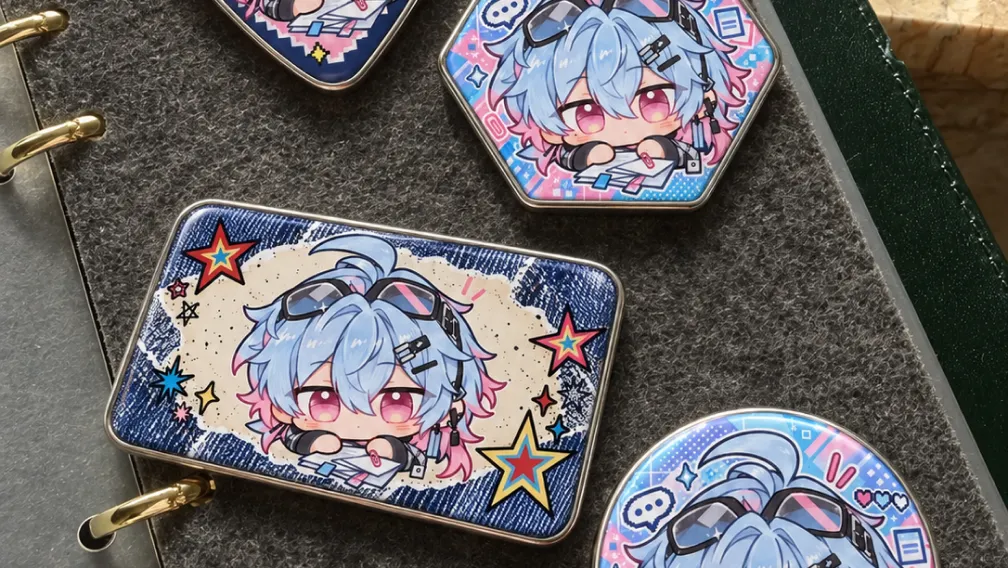
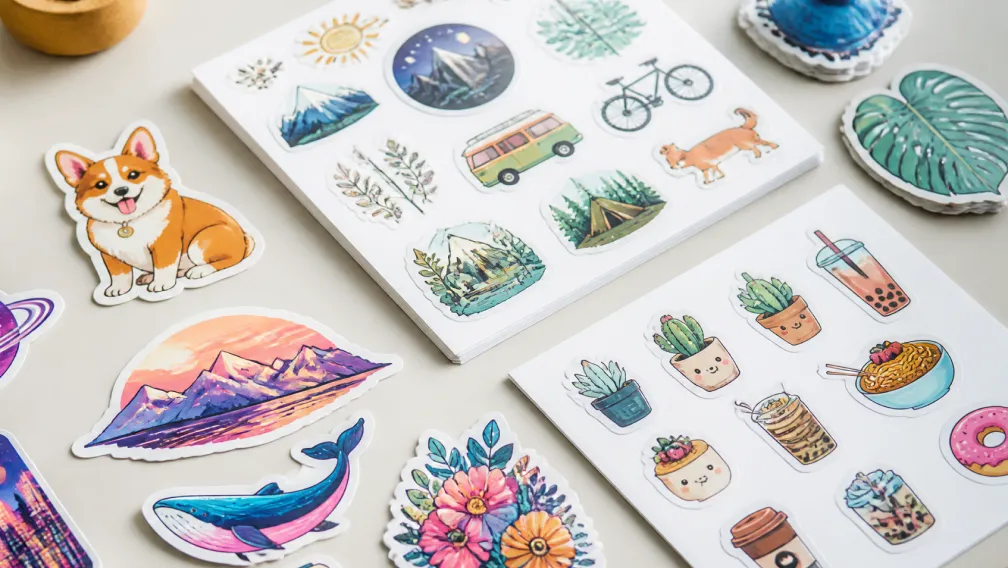
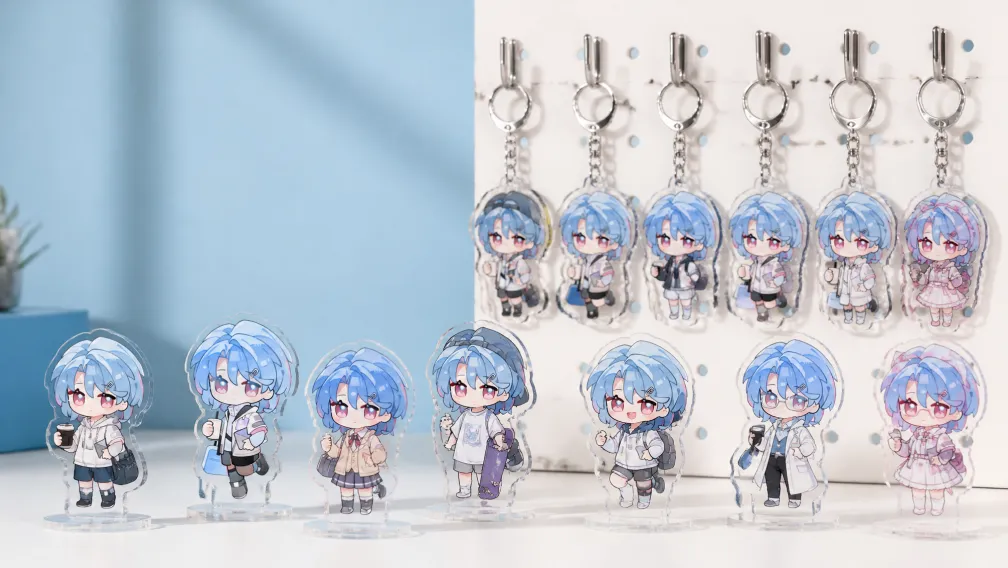
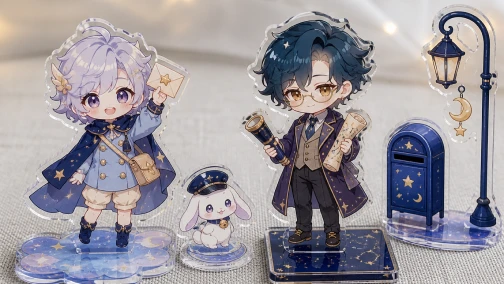
Merchandise formats suited to live commerce share a profile: visually demonstrable on camera, priced for impulse purchase, and collectible in series. Acrylic display pieces, badges, cards, and sticker formats fit that profile directly, from custom acrylic keychains and custom button pins to custom trading cards and custom vinyl stickers. Brands planning live-selling drops should align production calendars to broadcast dates rather than to traditional retail reset cycles.
What SKU Rationalization Means for Buyers
The Loungefly decline was deliberate. Management framed it as SKU rationalization: cutting tail products to concentrate the assortment behind items with stronger demand and return potential. This is the same discipline visible across the licensing industry this autumn, and it changes the buyer's relationship with manufacturers. Fewer SKUs means larger, more consolidated programs per design, higher scrutiny on unit economics, and a preference for suppliers who can carry a concentrated program across multiple formats without splitting sourcing. When a brand commits volume to fewer designs, color consistency across materials and processes becomes a program-level requirement, because the same character art now runs across figures, apparel accessories, print goods, and acrylic formats simultaneously.
Key Figures From Funko Q3 2026
| Indicator | Q3 2026 Reading | Change vs. Q3 2025 |
|---|---|---|
| Net sales | $258.3 million | +3.0% |
| Core Collectibles sales | $210.1 million | +4.8% |
| Loungefly sales | $40.3 million | –9.8% (deliberate SKU rationalization) |
| Gross margin | 45.2% | +5.0 points |
| Adjusted EBITDA | $32.1 million (12.4% margin) | vs. $24.4 million |
| Europe net sales | $82.7 million | +11.5% |
| Pop! Mystery launch | 100% sell-through; 3x projected pace | New format validation |
| Full-year 2026 guidance | Sales flat to +3%; adjusted EBITDA $100–110 million | Reiterated |
Planning Implications for 2027 Programs
Three planning conclusions follow for brands and IP holders finalizing 2027 merchandise programs. First, rarity and mystery mechanics are now validated at the top of the market, so blind-bag configurations, chase ratios, and sealed packaging belong in early specification discussions. Second, speed requirements are structural: qualify suppliers on sampling velocity and reorder turnaround, and confirm production-data retention in writing. Third, drops and live-commerce events compress inventory timelines, so production calendars should anchor to event dates with complete pre-event delivery. Our earlier analysis of Funko's Q2 collectibles demand tracked the demand side of this recovery; the Q3 disclosures now show the operational model being rebuilt around it.
It is also worth noting what the quarter says about channel geography. Europe's 11.5% sales growth and EMEA's 16% point-of-sale unit growth outpaced the US by a wide margin, extending a pattern visible across the licensing sector through 2026. Brands planning 2027 assortments should weigh whether their current distribution and manufacturing programs give European retail the same product depth as the domestic channel, because the growth data suggests under-served demand on that side of the Atlantic.
Working With Modori Works
Modori Works manufactures licensed and original merchandise programs from a 10,000-square-meter production campus in China's Yangtze River Delta, with Disney FAMA authorization and ISO 9001, BSCI, and Sedex certifications. Our lines support the formats driving the current market, including blind-bag configurations, short-run event exclusives, and rapid replenishment on archived production data. Brands planning 2027 programs can submit artwork and target quantities for a production feasibility assessment and factory-direct quotation.
-

Modori Works Team
Custom B2B Merchandise Manufacturer
Authored by the engineering and production specialists at Modori Works. We share deep manufacturing insights, material breakdowns, and workflow guides to help global brands, artists, and event organizers bring custom acrylics, keycaps, and collectibles to life with strict IP protection.