As the manufacturing sector transitions from the summer convention rush into the critical Q4 2026 production cycle, independent creators, retail brands, and event organizers face a highly compressed procurement window. Data from the past 30 days of global supply chain activity (August to September 2026) indicates significant shifts in how custom fan merchandise is manufactured, sourced, and shipped.
For B2B buyers and high-volume artists, relying on outdated procurement strategies this quarter will likely result in out-of-stock inventory during peak holiday sales events. Key industry dynamics over the last month reveal a sharp increase in demand for sustainable manufacturing materials, rising air freight premiums, and a clear consumer preference for high-margin, interactive merchandise over standard flat prints. This industry report outlines the current manufacturing landscape and provides actionable supply chain strategies for sourcing custom merchandise effectively through the end of 2026.
The Accelerating Transition to Eco-Friendly Acrylics (Recycled PMMA)
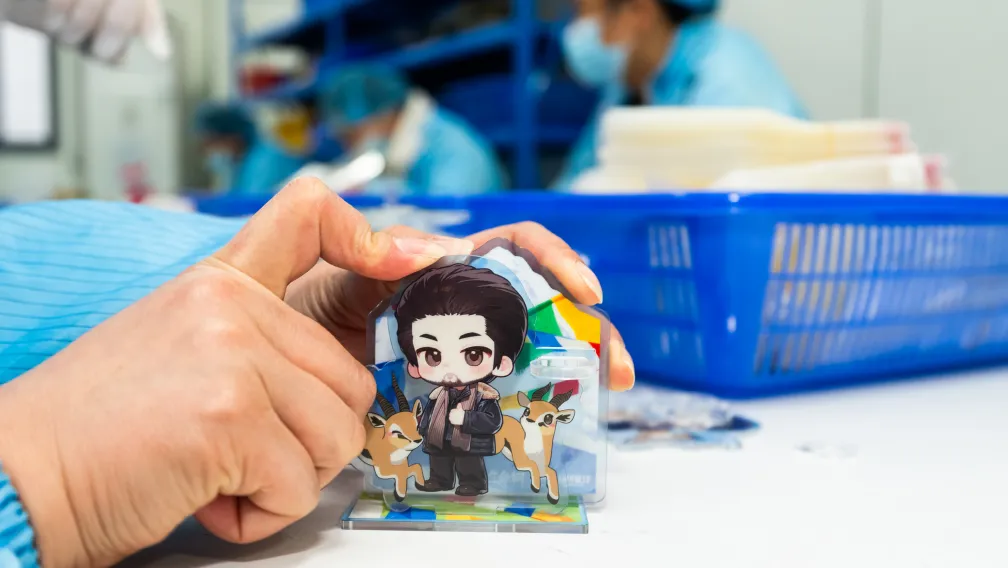
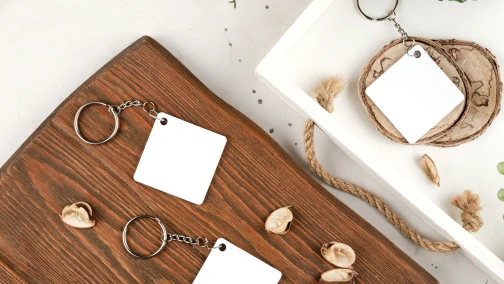
One of the most notable manufacturing shifts observed in August 2026 is the widespread commercial adoption of recycled PMMA (Polymethyl Methacrylate) in the production of custom acrylic keychains and related rigid plastics. This transition is no longer merely a marketing angle; it has become a strict compliance requirement for vendors participating in several major European and North American trade shows.
Virgin acrylic production requires high energy inputs and petroleum-based precursors. In contrast, certified recycled acrylic utilizes post-industrial scrap and reclaimed plastics, reducing the carbon footprint of the raw material by up to 60%. Importantly, recent advancements in UV digital printing adhesion and surface polishing mean that 100% recycled acrylic now matches virgin acrylic in optical clarity (light transmission rates exceeding 92%) and structural durability.
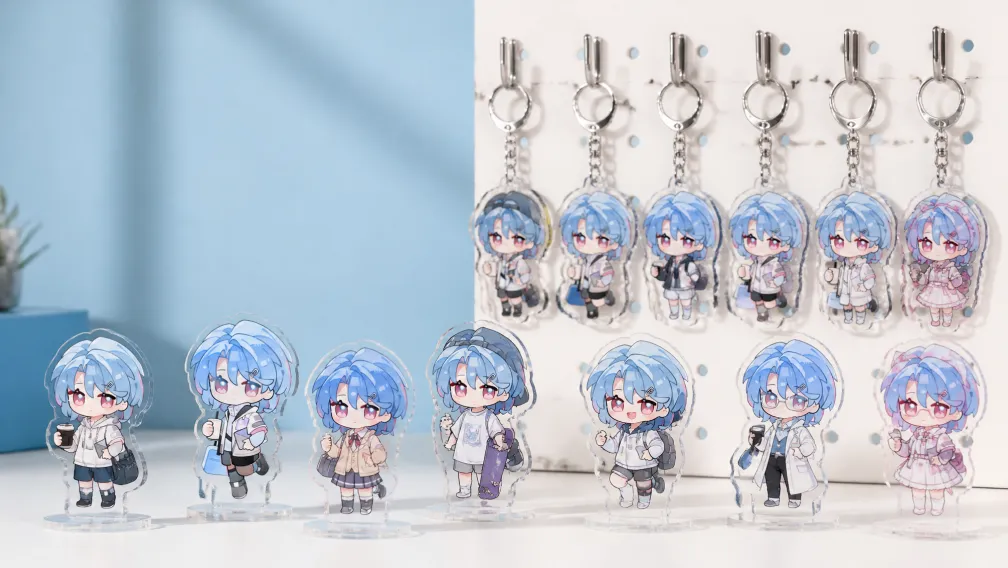
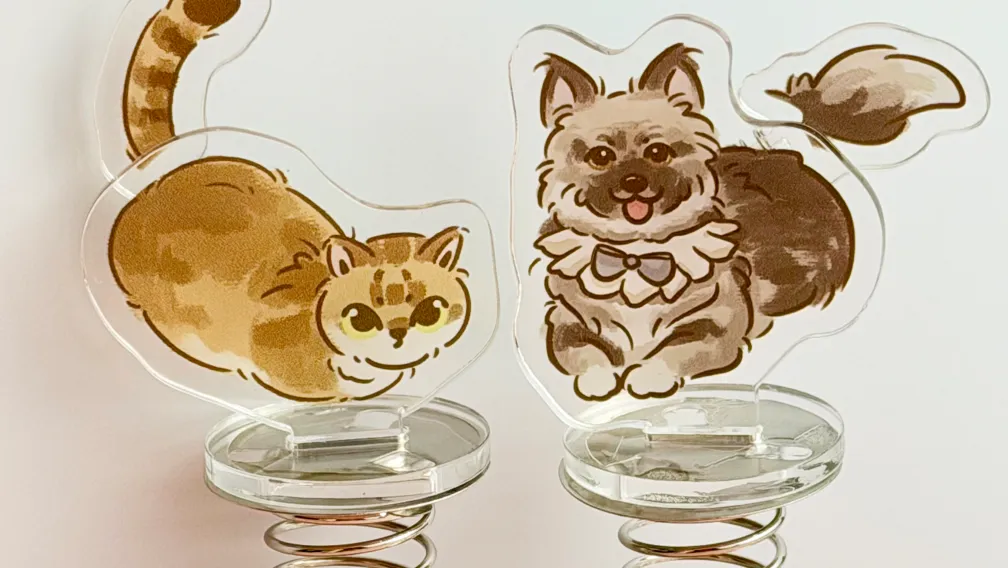
For B2B buyers, this means you can transition your entire inventory of flat charms and custom acrylic standees to sustainable materials without sacrificing print resolution or color accuracy. Factories are currently optimizing their extrusion lines to handle recycled PMMA at scale, stabilizing the unit cost. Brands that pivot to eco-friendly acrylics in Q4 2026 are positioning themselves favorably against tightening environmental regulations while meeting the ethical sourcing demands of the modern consumer demographic.
Q4 Logistics: Navigating Freight Costs and Lead Times
Logistics volatility remains a primary concern for the remainder of 2026. Global shipping indices throughout August highlighted a tightening of air freight capacity heading into the holiday season. The surge in cross-border e-commerce volume typically absorbs significant cargo space from October through December, driving up spot rates for expedited shipping.
Standard production for made-to-order merchandise requires careful lead-time buffering. Currently, the industry standard turnaround time encompasses proofing, physical manufacturing, quality control (QC), and shipping. While factory production times remain stable at approximately 10 to 15 business days depending on the product complexity, transit times are the variable.
Buyers must plan their Q4 inventory restocks immediately. Utilizing standard sea freight for high-volume orders will preserve profit margins, but it requires placing orders 45 to 60 days prior to the desired delivery date. Waiting until November to order holiday inventory will force buyers into premium air freight tiers, significantly eroding the gross margin on lower-priced impulse items like custom vinyl stickers and basic button pins. We strongly advise clients to review our FAQ regarding optimal production schedules and batch shipping strategies to mitigate these seasonal rate hikes.
Product Engineering: The Rise of Interactive and Premium Merchandise
Consumer purchasing data from late summer conventions demonstrates a clear saturation in basic, single-layer merchandise. To maintain strong average order values (AOV), retailers and artists are increasingly allocating their manufacturing budgets toward complex, interactive product categories.
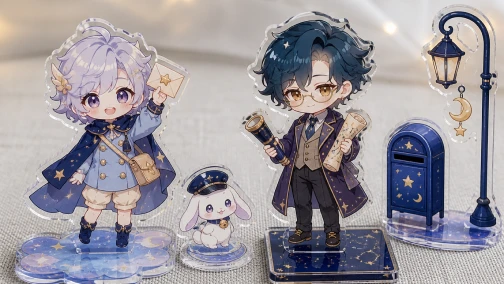
The manufacturing complexity of these items requires a higher caliber of factory partnership. For example, the demand for acrylic shaker standees has spiked by an estimated 35% across B2B wholesale orders. These products require precision CNC routing to create a three-layer acrylic cavity, rigorous tolerance checks to ensure the internal loose pieces do not jam, and specialized edge-sealing techniques to prevent structural failure during transit. Factories with outdated cutting hardware are struggling to maintain the 0.1mm tolerances required for flawless shaker assembly.
Similarly, the late 2026 market is experiencing a massive resurgence in physical media aesthetics. Driven by the Y2K nostalgia trend, custom CD keychains are moving from a niche novelty to a staple merchandise category. Manufacturing these involves miniature disc replication techniques and exact scale-down of standard jewel cases, demanding specialized injection molding capabilities beyond standard acrylic flat-cutting. Sourcing these premium items requires a supplier capable of managing multi-material assembly.
The Expansion of Collectible Card Formats
Alongside structural acrylics, the printing sector has seen heavy utilization of industrial press capacity for card stock and synthetic paper. The influence of global K-pop merchandising and localized Trading Card Game (TCG) communities has cemented the requirement for high-end card production.
In August 2026, manufacturers reported an increase in orders for specialty card finishes. Standard CMYK printing is no longer sufficient for premium event merchandise. Buyers are specifying complex file setups that include spot UV coating, intricate holographic foil stamping, and localized embossing. Furthermore, durability concerns have led to a shift away from standard paperboard toward custom trading cards utilizing PVC cores or fully transparent PET plastics. These materials offer superior resistance to edge wear and moisture, extending the collectible lifespan of the product.
Actionable B2B Procurement Strategy for Q4 2026
To successfully navigate the manufacturing landscape for the remainder of the year, B2B buyers must implement strict vendor consolidation and timeline management.
- Consolidate Suppliers: Managing separate factories for your acrylics, paper goods, and metal pins increases logistical overhead and the risk of mismatched brand colors. Partner with a comprehensive OEM/ODM manufacturer capable of handling diverse material portfolios under a single roof. This guarantees uniform color profiling (CMYK matching across different substrates) and consolidates shipping costs.
- Lock in Pre-Production Proofs Early: Do not wait until your full artwork lineup is complete to begin the sampling process. Submit files for your most complex items (like shaker standees or multi-layer pieces) immediately. Physical prototyping takes time. Approving physical samples in September guarantees that your mass production run can enter the factory queue without delay in October.
- Implement Tiered Shipping: For large volume orders, request split shipments. Ship 20% of your inventory via express air freight to cover immediate early-November demand, and route the remaining 80% via economical sea freight to sustain inventory through the winter convention season.
Partnering with a Reliable Manufacturer
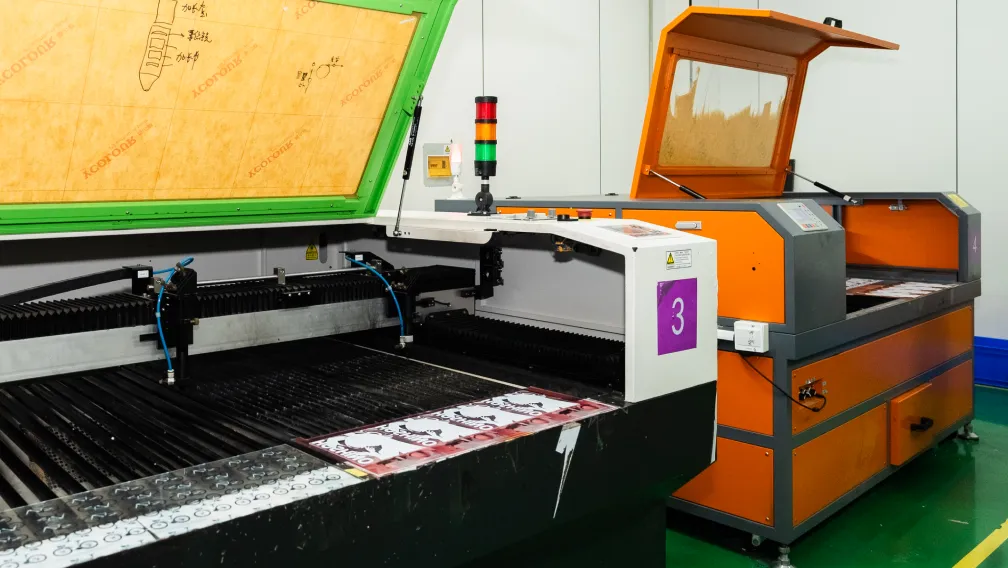
The differences in manufacturing quality become glaringly obvious during peak production seasons when substandard factories cut corners on UV curing times, resulting in peeling ink, or rush the laser cutting process, causing scorched acrylic edges. Understanding the technical capabilities of your supply chain partner is critical.
Modoriworks maintains strict quality control protocols, advanced UV digital printing arrays, and scalable production lines designed specifically for the rigorous demands of custom fan merchandise. To learn more about our specific manufacturing tolerances and material sourcing, or to verify our production standards, we invite prospective B2B clients to review our corporate infrastructure. Preparing for Q4 requires precise execution. Consolidate your manufacturing, finalize your product rosters, and contact our sales engineering team today to secure your production slot for the 2026 holiday season.
-

Modori Works Team
Custom B2B Merchandise Manufacturer
Authored by the engineering and production specialists at Modori Works. We share deep manufacturing insights, material breakdowns, and workflow guides to help global brands, artists, and event organizers bring custom acrylics, keycaps, and collectibles to life with strict IP protection.