Two datasets released in the first half of October 2026 have given the licensed merchandise sector its clearest demand signal of the year. On October 6, Licensing International published its annual Global Licensing Industry Study, reporting that worldwide sales of licensed merchandise and services reached $389.8 billion, a 5.45% increase over the prior year. One week later, Circana's October market update showed licensed toys growing more than twice as fast as the overall toy market across Europe's five largest economies. For brands, IP holders, and the OEM manufacturers that serve them, the October data carries direct implications for Q4 production planning, product format selection, and compliance preparation heading into 2027.
The October 2026 Data: Licensed Products Outperform the Broader Market
According to Circana, toy sales across the EU5 markets (the United Kingdom, France, Germany, Italy, and Spain) grew 8% year over year from January through August 2026. Over the same period, sales of licensed toys grew 20%. Licensed products now account for 35% of total toy sales value in these five markets, up from 31% in 2025. Roughly €35 of every €100 spent on toys in Western Europe is now attached to a recognizable entertainment property.
The category-level breakdown shows where licensing momentum is concentrated:
- Sports licensing expanded on the back of the 2026 FIFA World Cup cycle, which ran through the North American summer and sustained merchandise demand into Q4.
- Movie-related licensed toys grew 10%, with Toy Story merchandise reaching approximately six times its prior-year level, Spider-Man growing 47%, and Super Mario growing 43%.
- TV and streaming properties grew 15%, supported by a continuous pipeline of new streaming releases alongside established series.
- Established character IP remained the volume anchor: Pokémon retained its leading position in toy licensing with 9% sales growth.
Read together with Licensing International's global figure of $389.8 billion, the pattern is consistent across regions: consumer spending is concentrating on products built around established characters and entertainment IP, and that concentration is accelerating rather than plateauing.
NYCC 2026 Confirms the Limited-Edition Model at Retail Level
New York Comic Con, which ran October 8 through 11 at the Javits Center, provided a real-time demonstration of how IP holders and distributors are converting this demand into product strategy. The dominant format across the show floor was the limited production run.
Alliance Entertainment's popmarket brought sixteen exclusives built specifically for the convention, with edition sizes between 100 and 3,000 units and retail prices from $8 to $150. The assortment spanned action figures, lenticular puzzles, an exclusive comic, and collector vinyl, anchored by an Ultraman 60th Anniversary Legacy Collection limited to 100 units. Godzilla maintained a multi-vendor presence across the show, with merchandise timed ahead of the November 6 North American theatrical release of Godzilla Minus Zero, including a limited glow-in-the-dark keychain, die-cut stickers, and plush charms. DC's booth program centered on limited foil comic covers and first-to-market merchandise, while Funko distributed convention exclusives through its flagship stores under a digital queue system. Licensed properties with Asian origins, including One Piece and KPop Demon Hunters, occupied prominent positions across multiple booths.
Three operational details from NYCC matter for anyone planning merchandise programs. First, edition sizes are deliberately small because scarcity is the pricing mechanism: a 100-unit run at $150 coexists with a 3,000-unit run at $20 under the same booth. Second, exclusives increasingly combine multiple product formats and manufacturing processes in a single drop, from glow-in-the-dark molded keychains to die-cut stickers and printed apparel. Third, sell-through risk is managed by design; remaining stock flows into wholesale and direct-to-consumer channels after the show, which means production runs are calculated against multi-channel distribution from the start.
What the Data Means for Merchandise Manufacturing in Q4 and Beyond
Short-Run Flexibility Becomes a Core Procurement Criterion
When edition sizes of 100 to 3,000 units define the retail strategy, the manufacturing supply chain must profitably support runs that traditional mass-production economics would reject. This shifts procurement priorities toward factories that can hold quality tolerances at low volumes, switch artwork without lengthy retooling, and consolidate several product formats under one roof. The growth of licensed goods to 35% of European toy sales value guarantees that more brands will compete for this short-run capacity in 2027.
Anime and Game IP Drives the Highest-Fidelity Product Formats
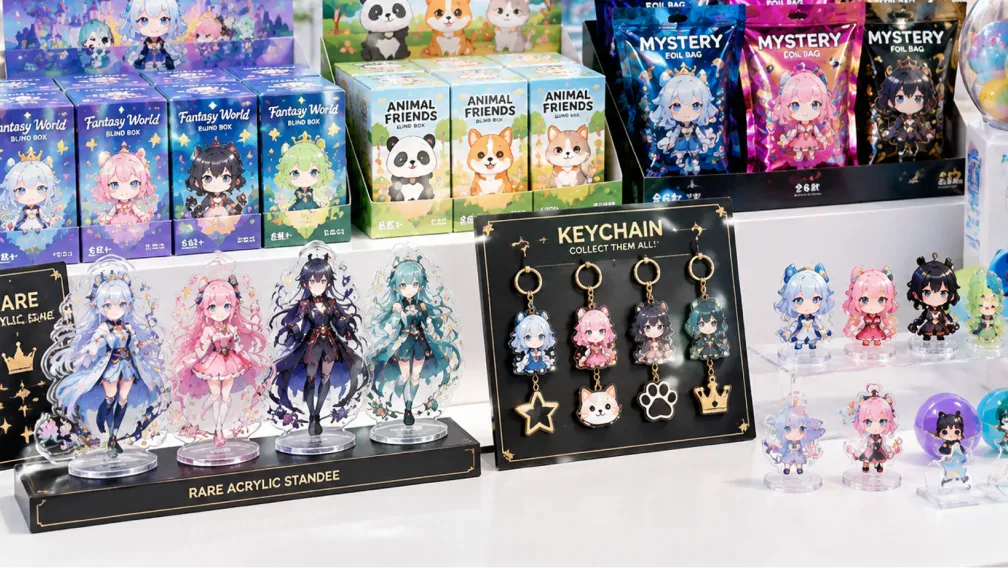
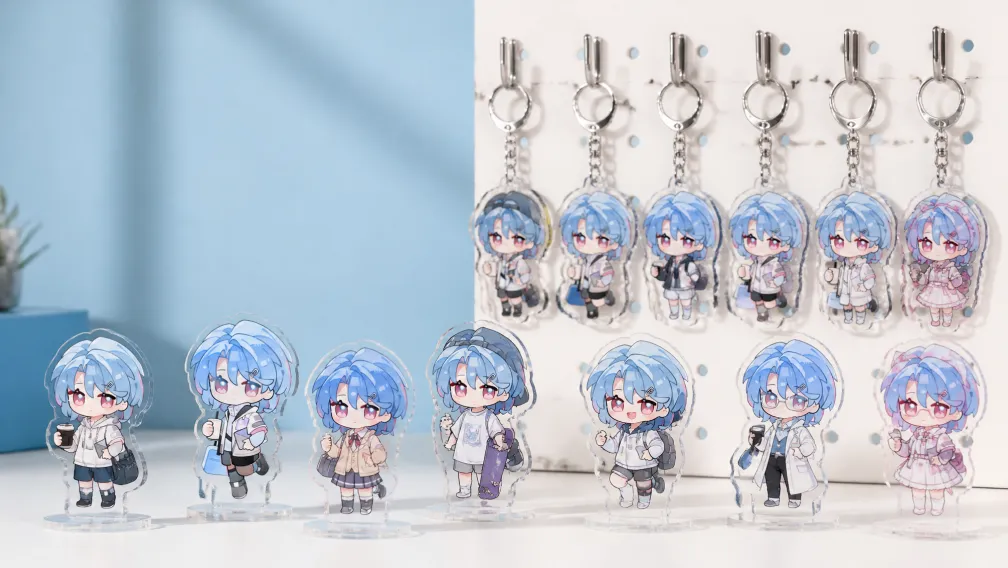
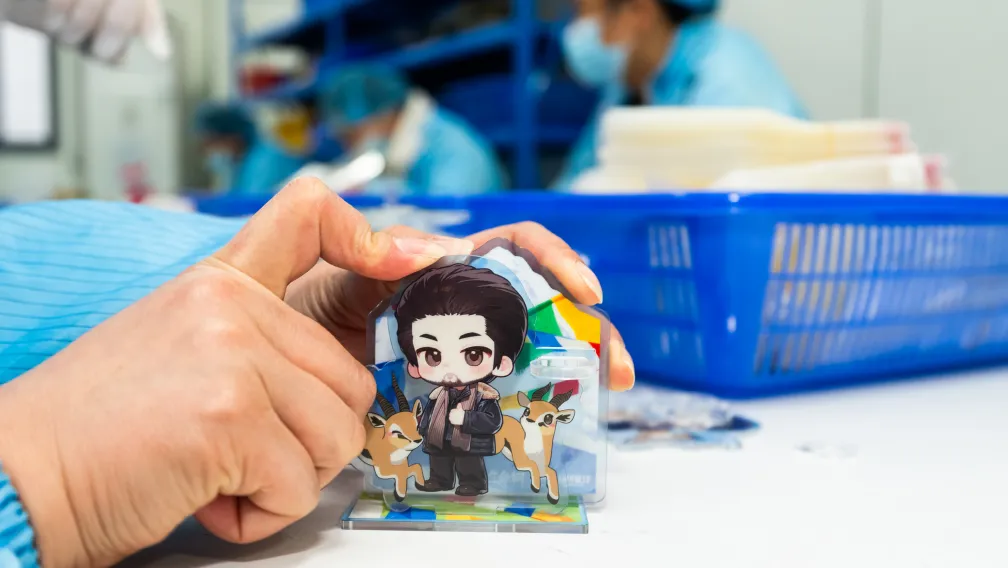
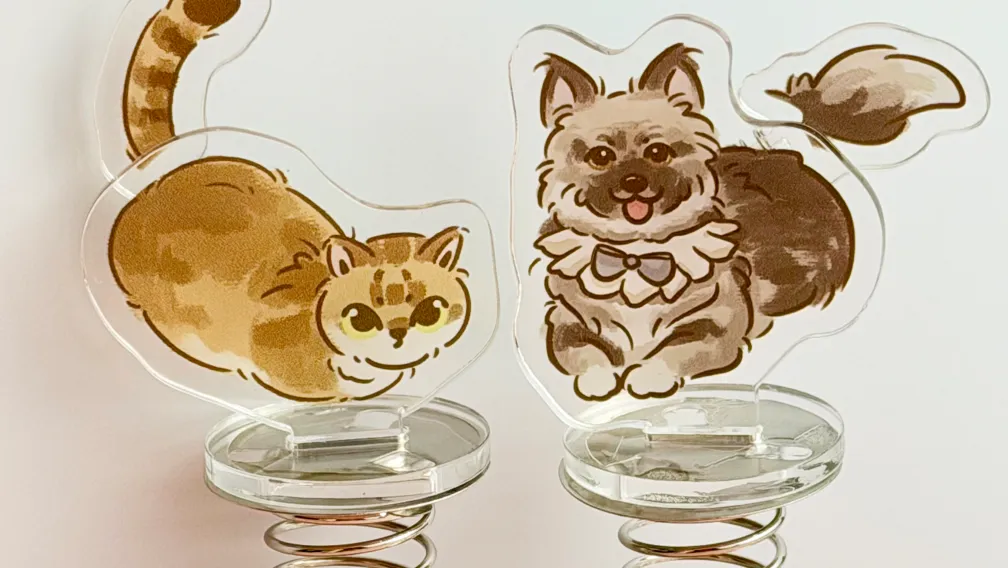
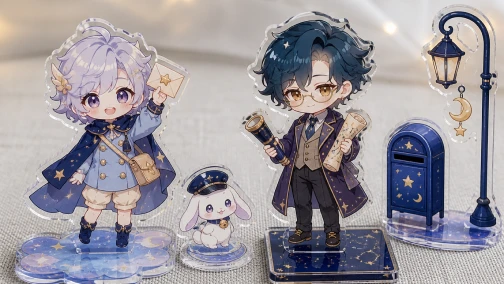
The composition of the October growth figures deserves attention from merchandise developers. Circana's 15% growth in TV and streaming licensing is being fed substantially by anime and game properties, and NYCC's floor plan confirmed it: One Piece, KPop Demon Hunters, Godzilla, and Ultraman occupied anchor positions alongside Western superhero franchises. Anime fandom buys differently from mainstream toy buyers. Purchases skew toward display-grade collectibles and wearable fandom signals rather than play-pattern toys, and artwork fidelity is the primary purchase criterion. A keychain or standee succeeds on the accuracy of its color reproduction, the cleanliness of its cut line, and the quality of its surface finish, because the product functions as a portable print of the underlying illustration. This demand profile favors manufacturing processes with high color resolution and fine contour capability, and it explains why acrylic formats, enamel-style badges, and foil-finished paper goods continue to absorb a growing share of licensed merchandise budgets.
Compliance Credentials Move From Advantage to Entry Ticket
A 20% growth rate in licensed products brings an equal growth in IP holder oversight. Brands and licensors auditing factories in 2026 increasingly treat social compliance and IP-handling certification as mandatory screening criteria rather than differentiators. Facilities holding Disney FAMA authorization, ISO 9001 quality management certification, and BSCI or Sedex audit records are the ones being shortlisted for licensed programs, because these credentials pre-answer the licensor's due-diligence questions. Manufacturers without verifiable documentation are being filtered out before pricing is ever discussed.
Format Diversification Follows the License
The NYCC product mix illustrates a broader structural point: a single license now activates across figures, paper goods, acrylic items, textiles, and molded accessories simultaneously. Anime and game IP in particular drives demand for high-color-fidelity formats where artwork reproduction is the product, including acrylic standees, charms, badges, and trading cards. For manufacturers, the operational requirement is color consistency across materials, since the same character art must match whether it is UV-printed on acrylic, sublimated on fabric, or foil-stamped on card stock.
Replenishment Speed Separates Suppliers in the Restock Economy
Scarcity-driven retail models create a second-order manufacturing requirement that is easy to underestimate: restock velocity. When a limited run sells through at a convention or during a streaming release window, the licensor's next question is how fast a follow-up run can ship while demand is still active. Circana's growth percentages translate into reorder cycles measured in weeks rather than quarters. Factories that archive approved cutting outlines, color profiles, and material specifications from the first run can turn reorders around in a fraction of the original lead time. Buyers qualifying suppliers this quarter should ask specifically how artwork, tooling data, and QC records are retained between runs, because that retention policy determines whether a restock captures the demand window or misses it.
Industry Benchmarks at a Glance
| Indicator | October 2026 Reading | Source |
|---|---|---|
| Global licensed merchandise and services market | $389.8 billion, +5.45% YoY | Licensing International, Global Licensing Industry Study (Oct 6, 2026) |
| EU5 toy sales growth, Jan–Aug 2026 | +8% YoY | Circana (Oct 2026) |
| EU5 licensed toy sales growth, Jan–Aug 2026 | +20% YoY | Circana (Oct 2026) |
| Licensed share of EU5 toy sales value | 35% (vs. 31% in 2025) | Circana (Oct 2026) |
| Fastest-growing movie properties | Toy Story ~6x prior year; Spider-Man +47%; Super Mario +43% | Circana (Oct 2026) |
| NYCC 2026 convention exclusive edition sizes | 100–3,000 units; SRP $8–$150 | Alliance Entertainment / popmarket show program |
Planning Ahead: The 2027 Merchandise Calendar Starts Now
The convergence of the October datasets and the NYCC sell-through pattern points to a practical conclusion for Q4 planning. Demand for licensed and IP-driven merchandise is growing faster than the manufacturing capacity configured to produce it, particularly in the short-run, multi-format segment where anime and game properties concentrate. Brands finalizing 2027 programs should treat the current quarter as the window for factory qualification, sampling, and compliance documentation rather than waiting for Q1, when production slots ahead of the spring convention and retail season are typically already allocated.
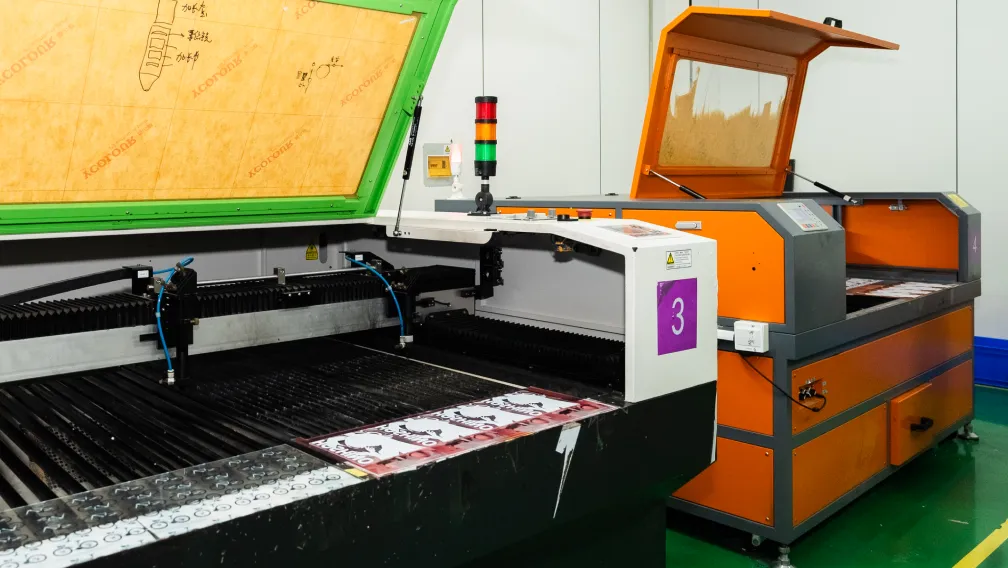
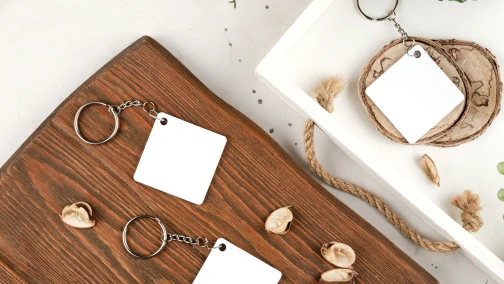
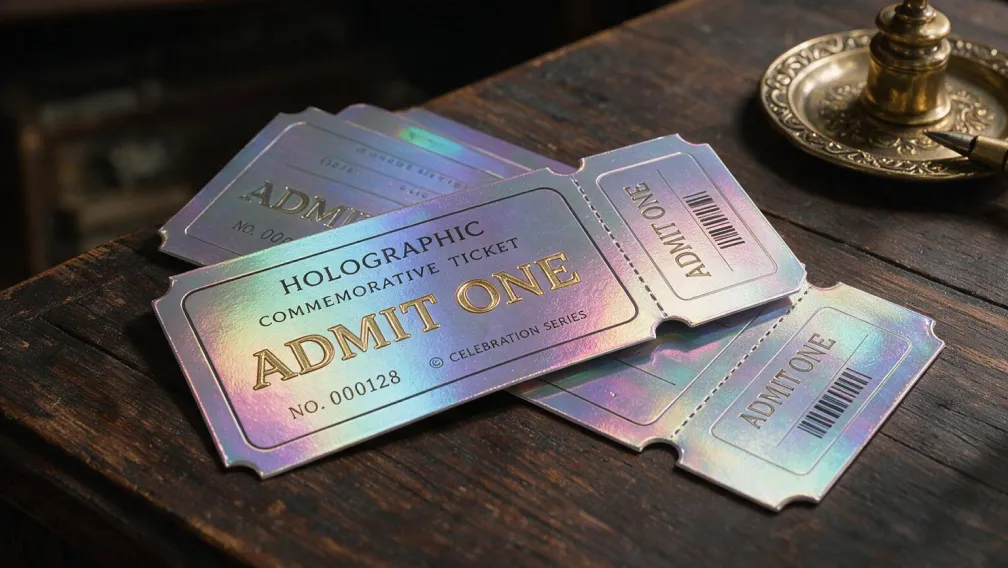
Modori Works supports licensed merchandise programs from its 10,000-square-meter production campus in China's Yangtze River Delta, with Disney FAMA authorization and ISO 9001, BSCI, and Sedex certifications covering more than 100 machines across UV printing, CNC cutting, hot stamping, and badge pressing lines. Our product scope spans custom acrylic keychains, custom button pins, custom trading cards, and custom holographic tickets, supporting edition sizes from small-batch convention exclusives to high-volume retail replenishment. Brands preparing 2027 licensed programs can submit artwork and target quantities for a production feasibility assessment and factory-direct quotation.
-

Modori Works Team
Custom B2B Merchandise Manufacturer
Authored by the engineering and production specialists at Modori Works. We share deep manufacturing insights, material breakdowns, and workflow guides to help global brands, artists, and event organizers bring custom acrylics, keycaps, and collectibles to life with strict IP protection.